
The dream of building something from the ground up, being your own boss, and seeing your vision come to life is a powerful motivator. In this year, the landscape for entrepreneurs is richer and more dynamic than ever, offering unprecedented opportunities alongside familiar challenges. If you’ve ever found yourself wondering, “How do I start my own company?” – you’re in the right place.
This comprehensive guide will walk you through every critical step, from initial idea to successful launch and beyond, equipping you with the knowledge to transform your aspirations into a thriving business. Starting your own company is a journey that demands dedication, strategic planning, and a willingness to learn, but the rewards can be immeasurable.
Key Takeaways
- Foundation First: A solid business idea, thorough market research, and a well-crafted business plan are non-negotiable for success.
- Legal & Financial Savvy: Choosing the right legal structure and understanding startup costs, funding options, and financial management are crucial.
- Market & Customer Focus: Deeply understanding your target market and competitive landscape is essential for product development and effective marketing.
- Execution & Adaptability: Launching a Minimum Viable Product (MVP), securing early sales, and continuously adapting to feedback are vital for growth.
- Compliance & Growth: Adhering to legal and regulatory requirements and fostering a culture of continuous learning are key to long-term sustainability.
Turning Your Idea into a Business Concept
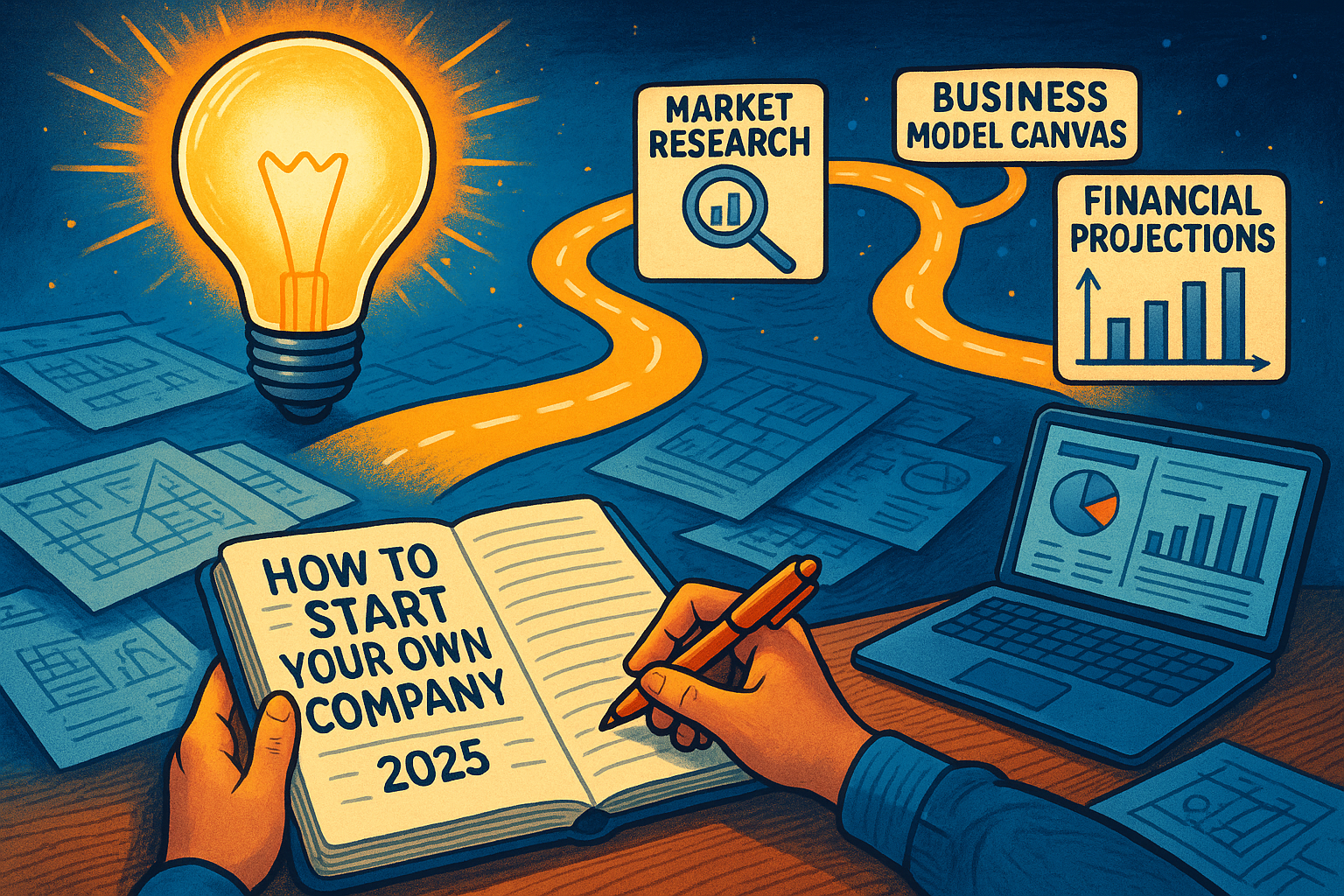
Every successful company begins with an idea, but not every idea becomes a successful company. The crucial first step in how to start your own company is to rigorously evaluate and refine your initial spark into a viable business concept. This involves more than just having a “good” idea; it means ensuring it solves a real problem, addresses a genuine need, or offers significant value to a specific group of people.
Let’s consider a quick story. Back in 2020, Sarah, a software engineer, noticed how difficult it was for local artisans to sell their unique, handmade goods online without navigating complex e-commerce platforms or paying high commissions.
Her initial idea was a simple online marketplace. But before diving in, she asked herself: Is this a common problem? Who exactly experiences it? What are they currently doing? Through informal surveys and discussions with local artists, she refined her concept. Instead of just a marketplace, she envisioned a “curated community platform” that offered easy listing, lower fees, and integrated local delivery options, specifically for unique craftspeople. This refinement, born from early validation, dramatically shaped her business.
Defining Your Value Proposition
Your value proposition is the unique promise of value your company offers to customers. It answers the question: “Why should a customer choose my product or service over the competition?” When you’re trying to figure out how to start your own company, nailing this down is paramount.
To define it, consider:
- Who is your target customer? (Demographics, psychographics, needs)
- What problem do you solve for them? (Pain points, unmet needs)
- What is the unique benefit or solution you offer? (Not just features, but what those features do for the customer)
- What makes you different from competitors? (Your unique selling proposition, or USP)
A strong value proposition is clear, concise, and compelling. It’s the core message that will underpin all your marketing and sales efforts.
Conducting Initial Market Research
You might have the best idea in the world, but if there’s no market for it, it won’t succeed. Market research is about understanding your potential customers, the industry, and your competitors.
Here’s how to approach it:
- Identify Your Target Market: Who are the people or businesses most likely to buy your product or service? Understand their demographics, behaviors, needs, and pain points.
- Analyze the Industry: What are the current trends? Is the market growing or shrinking? What are the barriers to entry? Look at industry reports, trade publications, and government statistics.
- Evaluate the Competition: Who are your direct and indirect competitors? What are their strengths and weaknesses? How do they price their products? What’s their customer service like? What gaps exist that your company could fill?
- Gather Feedback: Conduct surveys, interviews, and focus groups. Talk to potential customers. Ask open-ended questions. This is perhaps the most crucial step. Their unfiltered opinions will validate or invalidate your assumptions and help you refine your offerings.
| Research Method | Description | Best For |
|---|---|---|
| Surveys | Questionnaires distributed online or in-person. | Quantifying customer preferences, demographic data |
| Interviews | One-on-one conversations with potential customers or industry experts. | Deep insights into needs, motivations, pain points |
| Focus Groups | Small groups discussing specific topics, moderated by a facilitator. | Exploring perceptions, testing concepts |
| Competitor Analysis | Reviewing competitor websites, pricing, reviews, and marketing strategies. | Identifying market gaps, competitive advantages |
| Industry Reports | Published studies from market research firms or government agencies. | Understanding market size, trends, forecasts |
Remember, successful entrepreneurs aren’t afraid to pivot their idea based on market feedback. It’s far better to adjust early than to invest heavily in a product nobody wants.
Legal Structures and Financial Foundations
Once your business concept starts taking shape, the next crucial phase when figuring out how to start your own company involves laying the legal and financial groundwork. These decisions will impact your liability, taxation, administrative burden, and ability to raise capital.
Choosing the Right Legal Structure
The choice of legal structure is one of the most fundamental decisions you’ll make. It affects everything from how much personal liability you face to how your business is taxed.
Here are the most common options:
- Sole Proprietorship:
- Description: The simplest and most common structure for single-owner businesses. The owner and business are legally the same entity.
- Pros: Easy to set up, minimal paperwork, complete control, “pass-through” taxation (profits and losses reported on personal tax return).
- Cons: No personal liability protection (personal assets are at risk), harder to raise capital, business dissolves if the owner dies.
- Best for: Freelancers, independent contractors, very small businesses with low risk.
- Partnership (General Partnership – GP, Limited Partnership – LP, Limited Liability Partnership – LLP):
- Description: Two or more individuals agree to share in the profits or losses of a business. Different types offer varying levels of liability protection.
- Pros: Shared workload and resources, easier to raise capital than a sole proprietorship, pass-through taxation (GP).
- Cons: Shared liability (GP), potential for disputes, complex agreements needed.
- Best for: Businesses with two or more owners, professional service firms (LLP).
- Limited Liability Company (LLC):
- Description: A hybrid structure offering personal liability protection like a corporation, but with the pass-through taxation benefits of a partnership or sole proprietorship.
- Pros: Personal asset protection, flexible taxation (can be taxed as a sole prop, partnership, or corporation), fewer formalities than a corporation.
- Cons: State regulations vary, can be more complex than a sole proprietorship/partnership to set up.
- Best for: Most small to medium-sized businesses looking for liability protection and tax flexibility.
- Corporation (C-Corp or S-Corp):
- Description: A legal entity separate from its owners. C-Corps are subject to “double taxation” (corporate profits and shareholder dividends are taxed). S-Corps avoid double taxation by passing income/losses through to owners’ personal income.
- Pros: Strongest personal liability protection, easier to raise capital (can issue stock), perpetual existence, transferable ownership.
- Cons: Most complex to set up and maintain, significant regulatory requirements, potential double taxation (C-Corp).
- Best for: Businesses planning to raise significant outside capital, public companies, businesses with many owners.
Pro Tip: Consult with a business attorney and an accountant to determine the optimal structure for your specific business goals and risk tolerance. It’s an investment that pays dividends in the long run.
Understanding Startup Costs and Funding Options
“Money matters” – a simple phrase, but oh-so-true when figuring out how to start your own company. You need to know how much capital you’ll need and where it will come from.
Common Startup Costs:
- Legal & Administrative: Business registration fees, legal advice, permits, licenses.
- Equipment & Inventory: Computers, machinery, office furniture, initial product stock.
- Technology: Website development, software subscriptions, hosting fees.
- Marketing & Sales: Branding, advertising, PR, sales materials.
- Operating Expenses: Rent, utilities, salaries, insurance, initial working capital.
- Professional Services: Accounting, legal, consulting fees.
Create a detailed spreadsheet itemizing all anticipated costs for at least the first 6-12 months. Be realistic, and always add a contingency fund (15-20% extra) for unexpected expenses.
Funding Your Venture:
- Self-Funding (Bootstrapping):
- Description: Using your personal savings, credit cards, or borrowing from friends/family.
- Pros: Maintain full ownership and control, no debt or equity dilution.
- Cons: Limited capital, higher personal risk.
- Small Business Loans:
- Description: Loans from banks or other financial institutions, often backed by government agencies like the Small Business Administration (SBA) in the US.
- Pros: Lower interest rates, structured repayment terms.
- Cons: Rigorous application process, collateral often required.
- Angel Investors:
- Description: Wealthy individuals who invest their own money in early-stage companies in exchange for equity.
- Pros: Can provide valuable mentorship and industry connections.
- Cons: Give up a portion of ownership, can be hard to find.
- Venture Capital (VC):
- Description: Funds managed by firms that invest in high-growth potential startups in exchange for significant equity.
- Pros: Large sums of capital, strategic guidance, exit opportunities.
- Cons: Significant equity dilution, high expectations for rapid growth, often not suitable for small businesses.
- Crowdfunding:
- Description: Raising small amounts of money from a large number of people, usually online (e.g., Kickstarter, Indiegogo for rewards-based; SeedInvest, StartEngine for equity-based).
- Pros: Reach a wide audience, validate market interest, build a community.
- Cons: Requires strong marketing, may not raise sufficient capital, equity crowdfunding involves regulatory complexities.
- Grants:
- Description: Non-repayable funds from government agencies, corporations, or foundations.
- Pros: Free money, no equity given up.
- Cons: Highly competitive, strict criteria, often specific to certain industries or missions.
Crafting Your Business Plan and Product Strategy
With your core idea validated and legal/financial considerations understood, the next vital step when learning how to start your own company is to develop a robust business plan. This document serves as your roadmap, outlining your company’s goals and how you intend to achieve them. Simultaneously, you’ll refine your product or service strategy, focusing on delivery and customer experience.
Developing a Comprehensive Business Plan
A business plan isn’t just for investors; it’s a living document that clarifies your vision, identifies potential hurdles, and guides your decisions. While its format can vary, a typical business plan includes:
- Executive Summary: A concise overview of your business, its mission, products/services, leadership, market opportunity, and financial projections. Often written last.
- Company Description: Detailed information about your company, including its legal structure, mission statement, vision, values, and business objectives.
- Market Analysis: Summarize your market research here – target market, industry trends, and competitive landscape.
- Organization and Management: Introduce your team, their roles, expertise, and any advisors. Explain your organizational structure.
- Service or Product Line: Describe what you’re selling, its features, benefits, unique selling proposition, and how it addresses customer needs. Include any intellectual property.
- Marketing and Sales Strategy: How will you reach your target customers? What are your branding, pricing, promotion, and sales tactics?
- Funding Request (if applicable): Outline how much funding you need, how you’ll use it, and your repayment plan or equity offering.
- Financial Projections: Detailed financial forecasts including income statements, balance sheets, and cash flow statements for the next 3-5 years. These should be well-researched and realistic.
- Appendix: Include supporting documents like resumes, permits, licenses, letters of intent, and market research data.
Why is this important? Imagine Mark, who wanted to start a mobile dog grooming service. He had a great van and grooming skills. But without a business plan, he didn’t properly research local competition, failed to account for seasonal demand, and overlooked insurance costs. Three months in, he was struggling because he hadn’t planned for unexpected expenses or defined his marketing channels. A well-crafted plan helps you anticipate and mitigate these challenges before they become critical.
Product Development and Minimum Viable Product (MVP)
The product or service you offer is the heart of your business. In today’s fast-paced world, speed to market and customer feedback are paramount. This is where the concept of a Minimum Viable Product (MVP) shines.
- What is an MVP? An MVP is the version of a new product that allows a team to collect the maximum amount of validated learning about customers with the least effort. It’s about launching the core functionality that solves the primary problem for your target customers, nothing more, nothing less.
- Why an MVP?
- Reduces Risk: You don’t invest heavily in features customers might not want.
- Faster Launch: Get to market quicker to start gathering feedback.
- Validated Learning: Real users provide invaluable insights that theoretical research cannot.
- Resource Efficiency: Optimize your budget and time.
Steps for MVP Development:
- Identify Core Problem: What is the single most important problem your product solves?
- Define Core Solution: What is the simplest way to solve that problem?
- Outline Key Features: List the absolute essential features required for the solution. Strip away anything “nice to have.”
- Build and Test: Develop the MVP and rigorously test it internally.
- Launch to Early Adopters: Release your MVP to a small, targeted group of users (early adopters) who are willing to provide feedback.
- Gather Feedback & Iterate: Collect qualitative and quantitative feedback. Use this to inform subsequent iterations and feature development.
For example, Sarah, with her artisan marketplace idea, didn’t build a full-fledged platform with advanced search, integrated payment processing, and complex vendor profiles right away. Her MVP was a simple website with basic listing capabilities, a contact form for orders, and manual payment arrangements. It allowed her to validate that artisans would use it and customers would buy through it, before investing in more complex features. This lean approach is critical for any entrepreneur learning how to start your own company.
Building Your Brand and Marketing Strategy
Once your business plan is solid and your product strategy defined, the next critical step for how to start your own company is to build your brand identity and craft a compelling marketing strategy. Your brand is more than just a logo; it’s the emotional connection customers have with your business. Your marketing strategy is how you communicate that brand and its value to the world.
Developing Your Brand Identity
Your brand identity is the visual and emotional representation of your company. It sets you apart and makes you memorable.
- Name Your Company:
- Make it Memorable & Relevant: Easy to pronounce, spell, and recall.
- Check Availability: Ensure the name isn’t already trademarked, and the domain name (website URL) is available.
- Consider Future Growth: Will the name still fit if your business expands or pivots?
- Anecdote: A colleague once named their consulting firm “Tech Solutions Now.” It was generic and forgettable. Later, they rebranded to “Synapse Innovation,” which sounded more forward-thinking and unique, immediately elevating their perceived value.
- Create a Logo and Visual Identity:
- Professional Design: Invest in a professional logo. It should be scalable, versatile, and reflective of your brand’s personality.
- Color Palette: Choose colors that evoke the desired emotions and align with your brand (e.g., blue for trust, green for nature/health).
- Typography: Select fonts that are legible and consistent with your brand’s tone.
- Brand Guidelines: Document your brand elements (logo usage, colors, fonts) to ensure consistency across all platforms.
- Define Your Brand Voice and Messaging:
- Tone: Is your brand formal, casual, humorous, authoritative, friendly?
- Key Messages: What are the core messages you want to convey about your value proposition?
- Storytelling: Craft a compelling narrative about your company’s origin, mission, and why it matters. People connect with stories.
“Your brand is what people say about you when you’re not in the room.” – Jeff Bezos.
Crafting an Effective Marketing and Sales Strategy
Even the best product won’t sell itself. A well-defined marketing and sales strategy is essential to reach your target audience and convert them into paying customers.
- Identify Your Target Audience (Again): You did this in market research, but now refine it for marketing. Create buyer personas – semi-fictional representations of your ideal customers.
- Define Your Marketing Channels: Where will you reach your target audience?
- Digital Marketing:
- Website: Your online storefront and information hub.
- Search Engine Optimization (SEO): Optimizing your website to rank higher in search results for terms like “how to start your own company” or your specific product keywords.
- Social Media Marketing: Platforms where your audience spends time (e.g., LinkedIn for B2B, Instagram/TikTok for visual brands).
- Content Marketing: Blogs, videos, guides, podcasts that provide value and establish expertise.
- Email Marketing: Building a subscriber list and sending newsletters, promotions, and updates.
- Paid Advertising (PPC): Google Ads, social media ads to quickly reach a targeted audience.
- Traditional Marketing (if applicable): Print ads, radio, TV, direct mail.
- Public Relations (PR): Getting media coverage, press releases, thought leadership.
- Networking & Events: Industry conferences, local business gatherings.
- Digital Marketing:
- Set Clear Marketing Goals:
- Increase brand awareness by X% in 6 months.
- Generate Y leads per month.
- Achieve Z conversion rate on your website.
- Use SMART goals (Specific, Measurable, Achievable, Relevant, Time-bound).
- Develop Your Sales Funnel: Map out the customer journey from initial awareness to purchase and retention.
- Awareness: How do people first hear about you?
- Consideration: How do you educate and nurture leads?
- Decision: What prompts them to buy?
- Retention: How do you keep them coming back?
- Pricing Strategy:
- Cost-Plus Pricing: Cost of production + a markup.
- Value-Based Pricing: Based on the perceived value to the customer.
- Competitive Pricing: Matching or slightly undercutting competitors.
- Freemium: Offer a basic version for free, charge for premium features.
- Measure and Adapt: Constantly track your marketing efforts. What’s working? What isn’t? Be prepared to adjust your strategy based on data. Tools like Google Analytics and social media insights are your friends here.
Remember, consistency is key in branding and marketing. Every interaction a customer has with your company—from your website to a social media post to a customer service email—should reinforce your brand identity and messaging. This deliberate approach is fundamental for anyone looking to understand how to start your own company successfully.
Operations, Launch, and Growth
You’ve built your foundation, created your product, and defined your brand. Now it’s time for the exciting part: setting up your operations, launching your business, and focusing on sustainable growth. This stage is all about execution, learning, and adaptability when you embark on how to start your own company.
Setting Up Business Operations
Efficient operations are the backbone of any successful business. They ensure you can deliver your product or service consistently and profitably.
- Technology Infrastructure:
- Website/E-commerce Platform: Ensure your website is robust, user-friendly, and secure.
- Software & Tools: Invest in essential software for accounting (e.g., QuickBooks, Xero), customer relationship management (CRM) (e.g., HubSpot, Salesforce), project management (e.g., Asana, Trello), and communication (e.g., Slack, Microsoft Teams).
- Cloud Services: For data storage, collaboration, and scalability.
- Supplier and Vendor Relationships:
- Identify reliable suppliers: For raw materials, components, or services critical to your business.
- Negotiate contracts: Secure favorable terms, quality standards, and delivery schedules.
- Build strong relationships: Treat your vendors as partners.
- Hiring and Team Building (if applicable):
- Define roles and responsibilities: Clearly outline what each position entails.
- Recruit wisely: Look for skills, cultural fit, and passion.
- Onboarding and Training: Ensure new hires understand your company culture, processes, and goals.
- Foster a positive work environment: Happy employees are more productive.
- Processes and Workflows:
- Document key processes: From order fulfillment to customer service.
- Automate where possible: Streamline repetitive tasks to save time and reduce errors.
- Quality Control: Implement measures to ensure your product or service consistently meets high standards.
The Grand Launch!
The launch isn’t just a single event; it’s the culmination of all your hard work. It’s about making your business available to the public and generating initial traction.
- Pre-Launch Hype:
- Generate buzz through social media teasers, email campaigns, and press releases.
- Offer early bird specials or exclusive access to build excitement.
- Story Time: When “The Artisan Hub” (Sarah’s marketplace) was ready, she created a countdown on her website and offered a free listing month for the first 50 artisans who signed up. This created a flurry of activity and ensured she had initial inventory for launch day.
- Launch Event/Day:
- Officially open your doors, launch your website, or announce your service availability.
- Consider a small launch event, webinar, or social media campaign.
- Have your customer support channels ready.
- Post-Launch Marketing Blitz:
- Amplify your message through all your chosen marketing channels.
- Run targeted ad campaigns.
- Seek media coverage and influencer collaborations.
- Gather Feedback Immediately:
- Pay close attention to initial customer feedback, reviews, and support inquiries.
- Act quickly to address any bugs, confusion, or unmet expectations. This is where your MVP mindset continues to be invaluable.
Measuring Success and Scaling Your Company
Launching is just the beginning. True success comes from continuous improvement, customer satisfaction, and strategic growth. This is the ongoing effort of how to start your own company and make it thrive.
- Key Performance Indicators (KPIs):
- Financial: Revenue, profit margins, customer acquisition cost (CAC), lifetime value (LTV).
- Operational: Production efficiency, delivery times, inventory turnover.
- Customer-focused: Customer satisfaction (CSAT), net promoter score (NPS), retention rate.
- Marketing: Website traffic, lead generation, conversion rates.
- Regularly track these metrics to understand your business health.
- Customer Feedback Loop:
- Actively solicit feedback through surveys, reviews, and direct communication.
- Use this feedback to iterate on your product, improve customer service, and refine your offerings.
- “Listen to your customers, but don’t just blindly follow their demands. Understand their underlying needs.”
- Adaptability and Innovation:
- The market is constantly evolving. Be prepared to pivot, adapt, and innovate.
- Keep an eye on emerging technologies and trends.
- Continuously seek ways to improve your product, processes, and customer experience.
- Strategic Growth:
- Once you’ve achieved consistent success with your initial offering, consider:
- Expanding product lines: Offer complementary products or services.
- Entering new markets: Target different geographic areas or customer segments.
- Partnerships: Collaborate with other businesses to reach new audiences.
- Franchising: (For certain business models)
- Growth should be sustainable and aligned with your long-term vision. Avoid growing too fast without adequate resources or planning.
- Once you’ve achieved consistent success with your initial offering, consider:
Legal and Regulatory Compliance
Navigating the legal and regulatory landscape can seem daunting, but it’s a non-negotiable aspect of how to start your own company. Ignorance is not bliss when it comes to compliance; it can lead to hefty fines, legal disputes, and reputational damage.
Essential Registrations and Licenses
The specific registrations and licenses required will vary significantly based on your business type, industry, and location (city, county, state, and country).
- Business Name Registration:
- Even if you’ve chosen a legal structure, you might need to register your “doing business as” (DBA) name if it’s different from your legal name.
- Check with your state’s Secretary of State or equivalent office.
- Employer Identification Number (EIN):
- If you plan to hire employees or if your business is structured as a corporation or partnership, you’ll need an EIN from the IRS (in the US). This is like a Social Security number for your business.
- State and Local Business Licenses:
- Many states and municipalities require a general business license to operate.
- Specific industries (e.g., food service, childcare, construction, healthcare) often require additional professional or occupational licenses.
- Example: A food truck business in Portland, Oregon, needs a City of Portland business license, a Multnomah County health permit, and potentially a state food handler’s permit for its employees. Failing to secure these means they can’t legally operate.
- Sales Tax Permit:
- If you’re selling goods or certain services, you’ll likely need to register with your state’s tax authority to collect and remit sales tax.
- Intellectual Property Protection:
- Trademarks: Protect your brand name, logo, and slogans. Registering with the USPTO (in the US) or relevant international bodies is crucial.
- Copyrights: Protect original literary, artistic, or musical works (e.g., website content, software code, marketing materials). Copyright generally exists upon creation, but registration offers stronger legal protection.
- Patents: Protect novel inventions, designs, or processes. This is a complex and expensive process, usually reserved for highly innovative products.
Understanding Labor Laws and Employer Responsibilities
If you plan to hire employees, a whole new set of responsibilities arises. This is a critical area for anyone learning how to start your own company with a team.
- Employment Contracts: Clearly define terms of employment, roles, responsibilities, compensation, and confidentiality.
- Wages and Hours: Comply with minimum wage laws, overtime rules, and pay frequency regulations (federal, state, and local).
- Payroll Taxes: Withholding and remitting federal income tax, Social Security, Medicare, and state income tax from employee wages.
- Workers’ Compensation Insurance: Mandatory in most states, this provides benefits to employees injured on the job.
- Unemployment Insurance: Contributions to state unemployment funds.
- Non-Discrimination Laws: Ensure fair hiring practices and a workplace free from discrimination based on race, gender, religion, age, disability, etc.
- Workplace Safety: Adhere to OSHA (Occupational Safety and Health Administration) regulations to provide a safe working environment.
- Employee Benefits (Optional but Recommended): Health insurance, retirement plans, paid time off.
Crucial Advice: Don’t try to navigate these complexities alone. Always consult with an attorney and an accountant specializing in small business. They can provide tailored advice and help ensure your business remains compliant, safeguarding you from future legal troubles. The cost of professional advice upfront is usually far less than the cost of rectifying a legal mistake later.
Continuous Learning and Adaptation
The journey of how to start your own company doesn’t end with a successful launch. The most enduring businesses are those that embrace continuous learning, adapt to change, and foster a culture of innovation. The entrepreneurial landscape of 2025 is constantly shifting, making adaptability more important than ever.
Embracing a Growth Mindset
An entrepreneurial journey is filled with ups and downs. A growth mindset – the belief that your abilities and intelligence can be developed through dedication and hard work – is crucial for navigating these challenges.
- View Failures as Learning Opportunities: Not every idea will work out, and mistakes will happen. Instead of dwelling on setbacks, analyze what went wrong, extract lessons, and apply them moving forward.
- Stay Curious: Always be learning about your industry, new technologies, marketing trends, and business strategies. Read books, attend webinars, listen to podcasts, and engage with industry leaders.
- Seek Feedback (Always!): From customers, employees, mentors, and peers. Constructive criticism is a gift that helps you improve.
- Be Open to Pivot: Sometimes, your initial vision needs to change based on market realities or new opportunities. Being flexible enough to pivot your strategy or even your core business model can be the key to survival and ultimate success.
Consider this: A few years after launching “The Artisan Hub,” Sarah noticed a significant increase in demand for virtual workshops and DIY craft kits, particularly post-pandemic. Initially, her platform was just for selling finished goods. However, by listening to customer feedback and observing market trends, she quickly adapted. She integrated a new “Workshop & Kits” section, allowing artisans to offer online classes and sell material bundles. This pivot not only captured a new revenue stream but also deepened her community engagement, showcasing the power of adaptability.
Networking and Mentorship
You don’t have to figure everything out by yourself. Building a strong network and seeking mentorship can accelerate your learning and provide invaluable support.
- Networking:
- Industry Events: Attend conferences, trade shows, and local business meetups.
- Online Communities: Join relevant forums, LinkedIn groups, or specialized online entrepreneur communities.
- Collaborate: Look for opportunities to partner with other businesses that complement yours.
- The goal isn’t just to sell, but to build relationships, share knowledge, and identify potential synergies.
- Mentorship:
- Find Experienced Entrepreneurs: Seek out individuals who have successfully built businesses, ideally in your industry or a similar one.
- Formal Programs: Many incubators, accelerators, and SCORE (Service Corps of Retired Executives) offer mentorship programs.
- Informal Mentors: Don’t underestimate the value of informal advice from trusted advisors.
- A mentor can offer guidance, share their experiences, open doors to opportunities, and provide an objective perspective when you’re facing tough decisions.
Self-Care and Managing Burnout
The entrepreneurial journey is a marathon, not a sprint. The passion you have for how to start your own company can easily lead to working excessive hours, neglecting personal well-being, and ultimately, burnout.
- Set Boundaries: Clearly define work hours and stick to them as much as possible.
- Prioritize Sleep: It’s not a luxury; it’s essential for cognitive function, creativity, and resilience.
- Healthy Habits: Maintain a balanced diet, exercise regularly, and make time for activities you enjoy outside of work.
- Delegate and Outsource: As your business grows, learn to delegate tasks that others can do efficiently, freeing up your time for strategic work.
- Take Breaks: Schedule regular short breaks throughout your day, and take actual vacations. Stepping away can provide fresh perspective.
- Build a Support System: Lean on friends, family, or other entrepreneurs who understand the unique challenges you face.
Remember, your business depends on you. Taking care of your physical and mental health is not a weakness; it’s a strategic necessity for long-term success.
Conclusion
Starting your own company this year is an exhilarating and challenging endeavor, one that promises immense personal and professional growth. We’ve navigated the essential stages, from refining your initial idea and establishing a robust legal and financial foundation to crafting a compelling brand, executing a strategic launch, ensuring compliance, and committing to continuous learning. Each step, though distinct, is interconnected, forming a comprehensive pathway to building a thriving enterprise.
The journey will test your resolve, demand creativity, and necessitate unwavering dedication. However, by meticulously planning, embracing adaptability, and proactively seeking knowledge and support, you can transform your entrepreneurial vision into a tangible reality.
Your Next Steps:
- Refine Your Idea: Revisit your core business concept and ensure it solves a genuine problem.
- Start Researching: Dive deeper into your target market and competitive landscape.
- Seek Professional Advice: Consult with a business attorney and accountant to discuss legal structures and financial planning specific to your situation.
- Draft Your Business Plan: Begin outlining the sections discussed, even if it’s just a rough first draft.
- Connect and Learn: Start networking with other entrepreneurs and seek out potential mentors.
The most successful entrepreneurs aren’t those who never fail, but those who learn quickly from setbacks and persist with passion. The blueprint for how to start your own company is now laid out before you. Take that first courageous step, and embark on the incredible adventure of entrepreneurship.
Discover more from Start Entrepreneur Online
Subscribe to get the latest posts sent to your email.