

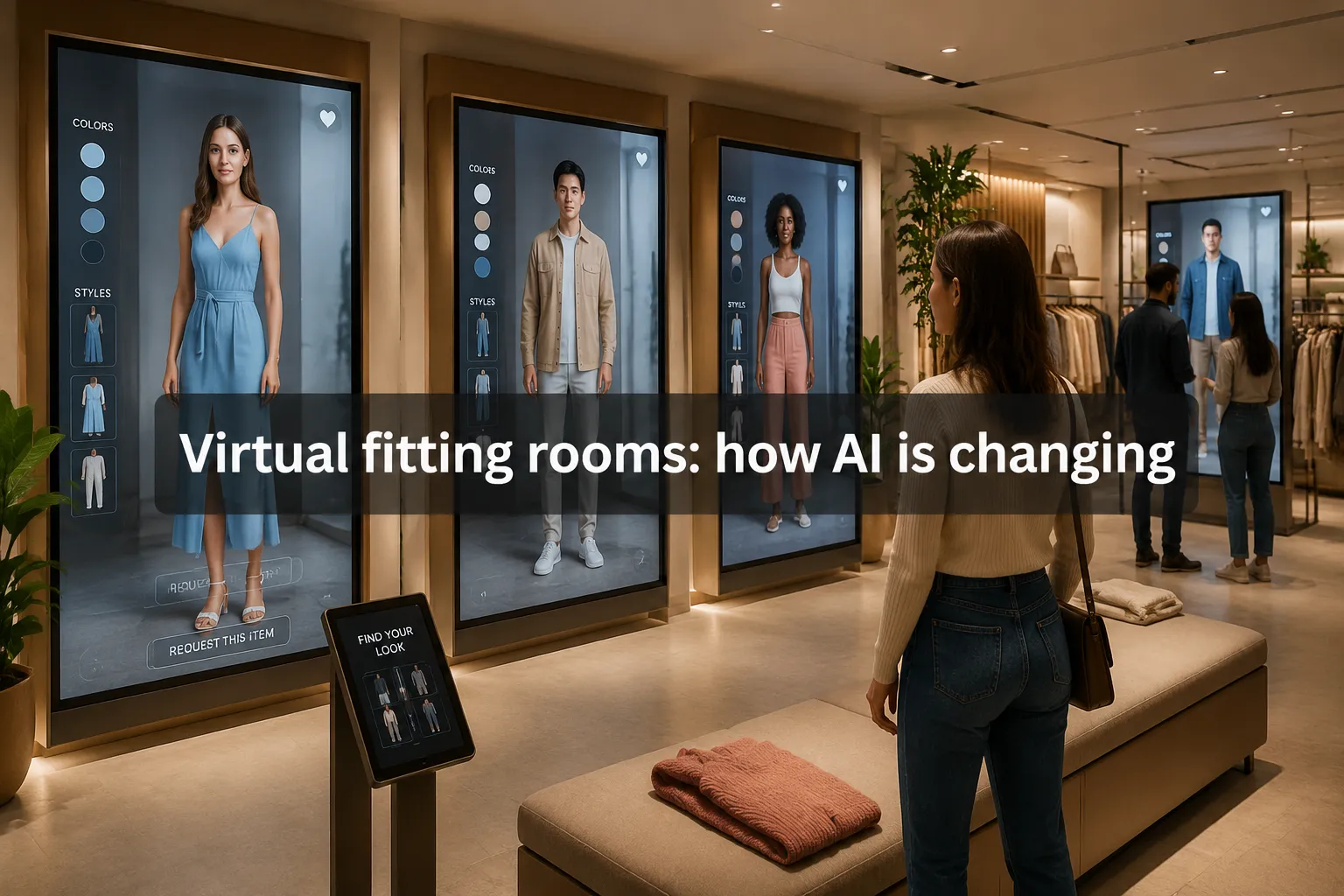

Virtual fitting rooms are innovative e-commerce tools that leverage artificial intelligence (AI) https://looksy.tech to allow customers to digitally “try on” clothes, offering a realistic preview of how garments fit and look on their unique body shape.
This technology aims to bridge the gap between online browsing and the physical fitting room experience, significantly enhancing customer confidence and streamlining the purchasing process in fashion e-commerce by 2026.
- Virtual fitting rooms (VFRs) use AI, augmented reality (AR), and 3D modeling to simulate clothing on digital avatars.
- They address a major pain point in online fashion retail: the inability to try on garments before purchase.
- Key benefits for customers include enhanced confidence in purchases, personalized sizing recommendations, and a more engaging shopping experience.
- For fashion brands, VFRs can lead to significant reductions in product returns, increased conversion rates, and improved customer loyalty.
- Costs for businesses vary widely, from subscription-based services for smaller retailers to custom enterprise-level integrations.
- Accuracy is continually improving, with advanced AI algorithms creating highly realistic fabric draping and fit simulations based on user measurements.
- VFRs primarily gather anonymized usage data and sometimes body measurements, raising important privacy considerations for brands to manage transparently.
- While offering substantial advantages, VFRs face challenges such as initial setup costs, data integration complexities, and user adoption rates.
- They are unlikely to fully replace physical fitting rooms but will continue to evolve as a critical component of omnichannel retail strategies.
- Leading providers in this space offer diverse solutions, from simple AR overlays to advanced 3D body-scanning technologies.
What are Virtual Fitting Rooms?
Virtual fitting rooms (VFRs) are digital platforms that enable online shoppers to visualize how clothing items would look on them without physically trying them on. They function by creating a digital representation of a garment and overlaying it onto a user’s avatar or real-time camera feed, providing an interactive and personalized “try-on” experience from any location. These systems are crucial for making online fashion purchases less uncertain.
Essentially, VFRs address the core challenge of online apparel shopping: fit uncertainty. By simulating the fitting process, they empower customers to make more informed decisions. This technology comes in various forms, from simple AR filters that place clothes on a live video feed to sophisticated 3D models that map garments onto a custom avatar based on detailed body measurements. For businesses looking to enhance their online presence and customer experience, integrating such technology offers a competitive edge in 2026.
How Do Virtual Fitting Rooms Actually Work with AI?
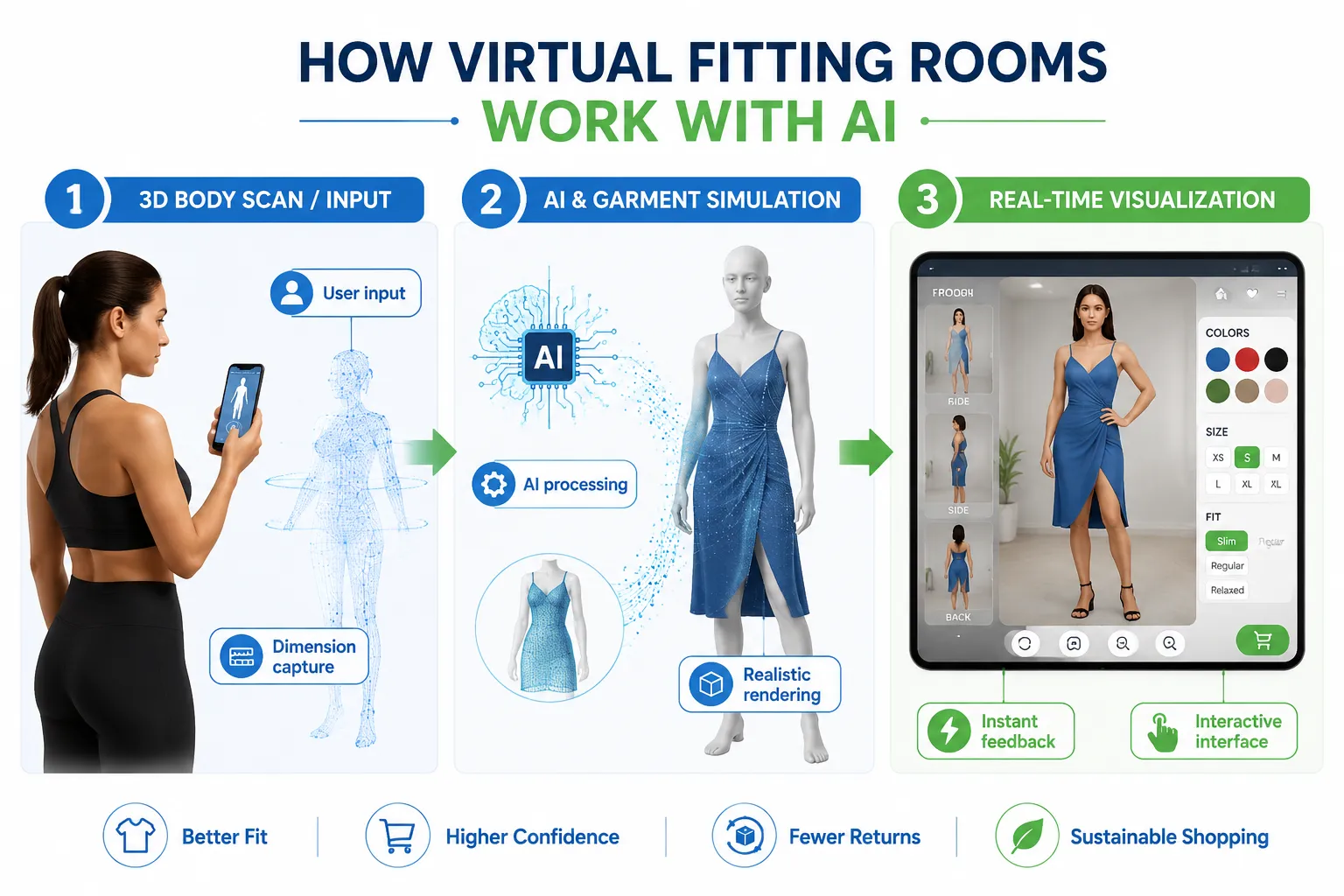
Virtual fitting rooms leverage artificial intelligence to power realistic garment simulation and personalized recommendations by processing user-specific data, such as body measurements or scans, and dynamically adjusting digital clothing items to reflect actual fit and drape. This process involves complex algorithms that convert physical garment attributes into digital ones and adapt them to individual body shapes.
The core mechanics typically involve several AI-driven steps:
- Body Data Acquisition: Users provide their body measurements, either manually, through a smartphone-based body scan, or via an existing profile. AI algorithms then construct a personalized 3D avatar that accurately represents the user’s body shape and dimensions. Some advanced systems can even infer body shape from a few key measurements using statistical models.
- Garment Digitization: Clothing items are digitized into 3D models. This often involves scanning physical garments or using CAD software to create precise digital replicas. AI helps analyze fabric properties like stretch, stiffness, and drape, translating these into realistic physical properties for the digital garment.
- AI-Powered Simulation: Once the avatar and garment are in digital form, AI algorithms perform the “fitting.” This includes:
- Collision Detection: Ensuring the digital fabric doesn’t pass through the avatar’s body unrealistically.
- Physics Simulation: Mimicking how different fabrics would naturally hang, fold, and stretch on the avatar, considering gravity and body movement. This is crucial for realism.
- Fit Analysis: AI assesses how well the garment fits the avatar based on standard sizing charts and the user’s specific measurements, often highlighting areas that might be too tight or too loose.
- Real-time Rendering: The simulated garment on the avatar is then rendered in real-time, often within a web browser, mobile app, or AR environment. This allows the user to rotate the avatar, see different angles, and sometimes even animate the avatar to walk or pose, providing a comprehensive view of the fit.
- Personalized Recommendations: Beyond just trying on, AI can analyze user preferences, past purchases, and fitting data to recommend other items, sizes, or styles that are likely to fit well and appeal to the individual.
One common mistake for businesses is underestimating the importance of high-quality 3D garment models; without accurate digital representations and realistic physics, the virtual try-on experience falls short of customer expectations.
What Are the Main Benefits of Using Virtual Fitting Rooms for Customers?
Virtual fitting rooms offer customers a significantly enhanced online shopping experience by boosting confidence in purchasing decisions, providing personalized fit assessments, and making the browsing process more engaging and convenient. This translates into fewer uncertainties traditionally associated with buying clothes without trying them on.
The primary benefits for customers include:
- Increased Purchase Confidence: Customers can visually confirm how an item will look and fit on their specific body shape, reducing apprehension about buying the wrong size or style. This confidence often leads to higher conversion rates.
- Reduced Fit Uncertainty: By simulating the try-on experience, VFRs help customers understand how a garment drapes, where it might be tight or loose, and if it aligns with their personal style, minimizing guesswork.
- Personalized Sizing Recommendations: Many VFR systems provide tailored size suggestions based on the user’s unique body data, often going beyond generic size charts to offer a more accurate fit.
- Convenience and Accessibility: Shoppers can try on numerous outfits from the comfort of their home, at any time, without the need to travel to a physical store or deal with crowded fitting rooms.
- Engaging and Interactive Experience: The novelty and interactivity of virtual try-ons make shopping more enjoyable, akin to a personalized styling session.
- Time Saving: Eliminating the need to order multiple sizes and return ill-fitting items saves significant time for the customer.
What Are the Benefits for Fashion Brands Using AI Fitting Rooms?
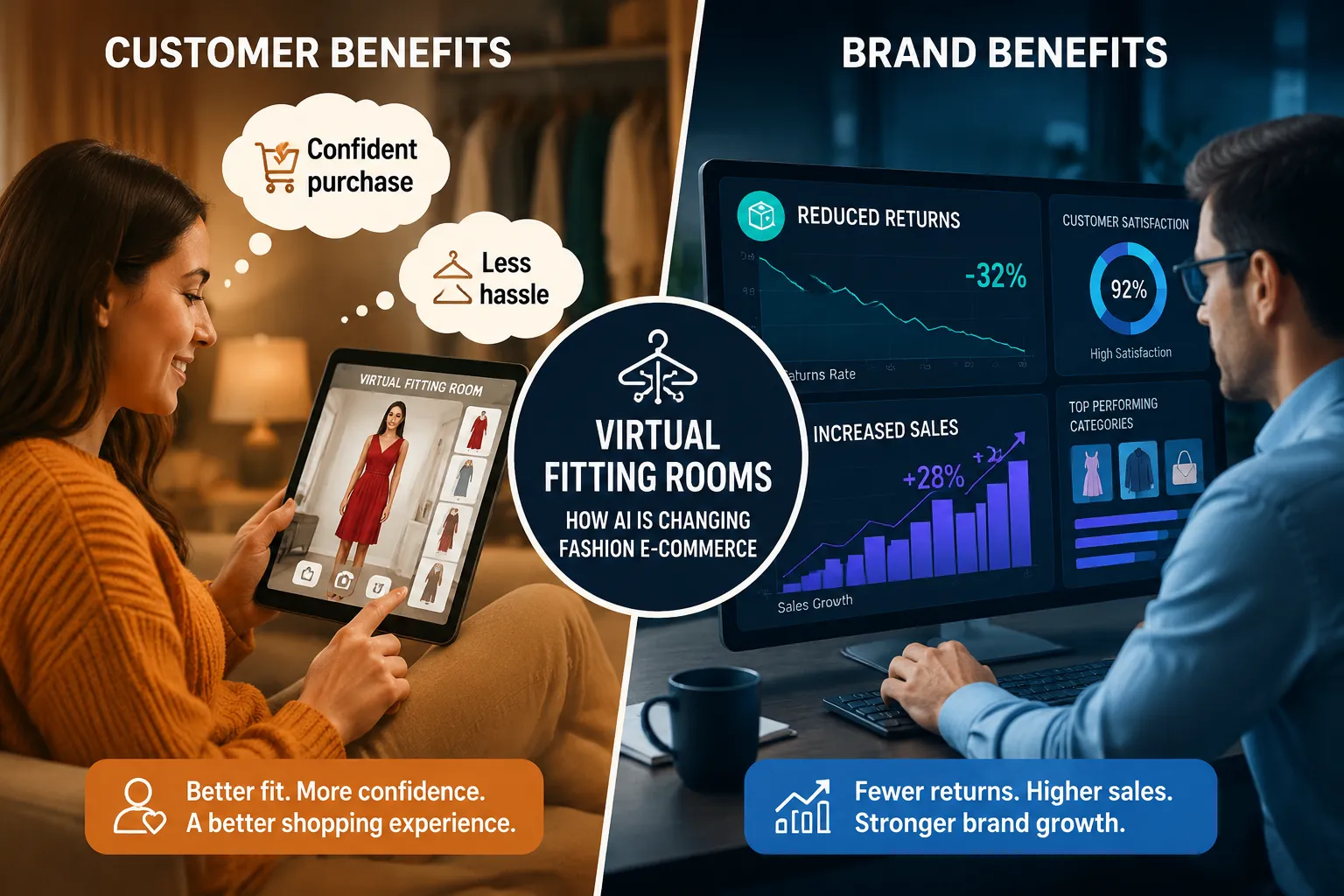
Fashion brands incorporating AI-powered virtual fitting rooms stand to gain substantial strategic advantages, primarily through reduced return rates, increased customer engagement, and improved data collection for better product development and marketing. These benefits directly impact a brand’s bottom line and market position in the competitive e-commerce landscape of 2026.
Here’s a breakdown of the key benefits for fashion brands:
- Significant Reduction in Returns: One of the most impactful benefits is the decrease in product returns, especially those related to fit and style discrepancies. When customers can accurately visualize how an item will look, they are less likely to return it. Returns cost brands billions annually in shipping, restocking, and lost sales.
- Increased Conversion Rates: By removing a major barrier to online purchase (fit uncertainty), VFRs encourage more shoppers to complete their transactions. Customers are more likely to buy when they feel confident about their choices.
- Enhanced Customer Satisfaction and Loyalty: A positive and personalized shopping experience fosters greater customer satisfaction, leading to repeat purchases and stronger brand loyalty. Brands that offer innovative solutions are often perceived as customer-centric.
- Richer Customer Data: VFRs can collect valuable anonymous data on customer preferences, body types, and try-on behaviors. This data can inform product design, inventory management, marketing strategies, and personalized recommendations, offering insights into how to look at your business from a new perspective.
- Competitive Differentiation: Offering a cutting-edge virtual try-on experience helps brands stand out in a crowded market, attracting tech-savvy consumers and demonstrating innovation.
- Reduced Operational Costs: Beyond returns, VFRs can indirectly reduce customer service inquiries related to sizing and fit, freeing up resources.
- Global Market Access: VFRs remove geographical barriers, allowing brands to cater to a diverse global audience with personalized fit solutions, irrespective of regional sizing standards.
An edge case to consider is luxury brands, where the physical tactile experience of trying on garments is often part of the allure. For these brands, VFRs may serve as an additional touchpoint rather than a complete replacement, enhancing product exploration without diminishing the in-store luxury experience.
How Much Do Virtual Fitting Room Solutions Typically Cost for Businesses?
The cost of virtual fitting room solutions for businesses varies significantly, ranging from a few hundred dollars per month for basic, plug-and-play subscriptions to hundreds of thousands or even millions for custom enterprise-level integrations and proprietary technology development. Pricing depends on the complexity of the solution, the number of garments, user volume, and the level of customization required.
- Subscription-Based SaaS Models: For small to medium-sized businesses (SMBs), many providers offer Software-as-a-Service (SaaS) models. These typically involve a monthly or annual fee based on:
- Number of SKUs: The quantity of unique clothing items to be digitized.
- Traffic/Usage: The number of virtual try-ons or active users.
- Features: Basic AR overlay vs. advanced 3D body mapping and analytics.
- Costs can range from $200 to $2,000+ per month for these solutions.
- Custom Integrations and Enterprise Solutions: Larger fashion retailers or brands seeking highly customized features, seamless integration with existing ERP/e-commerce platforms (like Woocommerce), or unique avatar creation tools will face higher costs. These projects involve:
- Development and Implementation Fees: One-time costs for building and integrating the specific solution.
- Licensing Fees: For proprietary software or algorithms.
- 3D Modeling Services: Costs for digitizing a large catalog of garments into high-fidelity 3D models.
- Maintenance and Support: Ongoing fees.
- These can start from $50,000 to $500,000+ for initial setup, with ongoing costs.
- Internal Development: Brands opting to build their VFR technology in-house incur significant R&D costs, including hiring AI engineers, 3D artists, and software developers. This route is typically only feasible for very large enterprises with substantial budgets.
A common mistake is selecting a solution purely based on the lowest upfront cost, which might lead to limited features or poor integration, ultimately failing to deliver the desired return on investment. Businesses should assess their specific needs, catalog size, and customer base before committing.
What Are Some Common Challenges or Drawbacks of Virtual Fitting Rooms?
Despite their numerous benefits, virtual fitting rooms present several challenges for both businesses and users, including the high cost of implementation, complexities in data integration, the continuous need for high accuracy, and potential user adoption barriers. These factors require careful consideration before deployment.
Here are some common challenges:
- High Initial Investment: Developing or integrating a sophisticated VFR system requires significant financial outlay for software, hardware (e.g., 3D scanners), 3D modeling of extensive product catalogs, and specialized personnel.
- Technical Complexity and Integration: Integrating VFR technology seamlessly with existing e-commerce platforms, inventory management systems, and customer databases can be technically challenging and time-consuming. It may require expertise in areas like online information technology.
- Data Accuracy and Realism: Achieving truly realistic garment drape, texture, and fit across all body types and garment styles remains an ongoing challenge. Minor inaccuracies can undermine customer trust and the effectiveness of the solution.
- User Adoption and Engagement: While novel, not all customers may be willing or able to provide body measurements or use AR features, especially if the process is perceived as too complex or privacy-invasive.
- Scalability: Maintaining high performance and realism as product catalogs expand or user traffic increases can be demanding on server infrastructure and computational resources.
- Digital Asset Creation: Digitizing an entire product line into high-quality 3D models is a labor-intensive and costly process, requiring specialized 3D artists and software.
- Privacy Concerns: The collection of detailed body measurements or scan data raises privacy questions, requiring brands to implement robust data protection policies and clearly communicate their practices to users.
For example, a small brand with a frequently changing inventory might find the continuous cost of 3D modeling new collections prohibitive for a highly accurate VFR, making simpler AR overlays a more practical alternative.
Are There Different Types of Virtual Fitting Rooms or Technologies?
Yes, virtual fitting rooms come in various types, utilizing different technologies to achieve the digital try-on experience, ranging from simple augmented reality (AR) overlays to sophisticated 3D body scanning and avatar-based systems. Each type offers distinct advantages and caters to different levels of realism and integration complexity.
The main types of virtual fitting room technologies include:
- Augmented Reality (AR) Overlays:
- How it works: These systems use a smartphone or webcam to overlay a 2D or basic 3D model of a garment onto the user’s live video feed. The garment “appears” on the user’s body as they look at their screen.
- Pros: Relatively easy to implement, accessible via mobile devices, and highly engaging.
- Cons: Often lacks precise fit accuracy, limited to 2D representations or simpler 3D models, and doesn’t account for body shape beyond basic positioning.
- Best for: Quick visual previews, accessories (glasses, jewelry), and items where exact fit is less critical.
- 3D Avatar-Based Systems:
- How it works: Users create a personalized 3D avatar by inputting detailed body measurements, uploading photos, or undergoing a body scan (e.g., via smartphone apps or dedicated kiosks). Digital garments are then rendered onto this custom avatar.
- Pros: Offers highly accurate fit simulation, allows for multiple angles and movements, and provides personalized sizing recommendations.
- Cons: Requires more user effort for initial setup, higher technical complexity and cost for brands to implement.
- Best for: Apparel where precise fit and drape are crucial, such as tailored clothing, dresses, and denim.
- Magic Mirror / Smart Mirror Solutions:
- How it works: These are interactive screens (often in physical stores) equipped with cameras and sensors. Shoppers stand in front of the mirror, and digital garments are overlaid onto their reflection in real-time. Some can perform body scans.
- Pros: Blends online and offline shopping, provides an immersive in-store experience, and can capture precise body data.
- Cons: High hardware costs, limited to physical locations (unless adapted for home use).
- Best for: Enhancing in-store experiences, showcasing full outfits, and luxury retail.
- AI-Powered Sizing Tools (Non-Visual VFRs):
- How it works: While not strictly “fitting rooms,” these AI tools use algorithms to recommend the best size based on a user’s inputted measurements, height, weight, preferred fit, and data from similar customers or returns. They don’t typically offer a visual try-on.
- Pros: Simple to implement, low cost, and can still significantly reduce size-related returns.
- Cons: Lacks the visual engagement and confidence-building aspects of graphical VFRs.
- Best for: Brands focused solely on reducing size-related returns with minimal visual investment.
Choosing the right technology depends on a brand’s specific goals, budget, product type, and target audience. For instance, a brand selling custom-tailored suits would benefit more from a high-accuracy 3D avatar system than a simple AR overlay.
Which Companies Are Leading Providers of Virtual Fitting Room Tech?
Several companies are at the forefront of developing and deploying virtual fitting room technology, each offering unique approaches and specialized solutions to the fashion e-commerce market. These leaders typically combine expertise in AI, 3D modeling, and augmented reality to serve diverse clients from startups to large retail chains.
Leading providers in the virtual fitting room space as of 2026 include:
- Zeekit (acquired by Walmart): Known for its sophisticated AI and image processing technology that allows customers to virtually try on clothing with realistic fabric drape on their own photos. Its acquisition by Walmart highlights the growing importance of this technology for mass-market retailers.
- Fit Analytics (acquired by Snap Inc.): While primarily a sizing recommendation platform, Fit Analytics leverages data science and AI to help customers find their best size. Its integration into Snap’s ecosystem points towards future AR-driven virtual try-on capabilities within social commerce.
- Trillenium: Specializes in creating highly realistic 3D virtual fitting room experiences, allowing shoppers to dress a customizable avatar with digital garments. They focus on detail and an immersive shopping journey.
- Virtual Try-On (VTO) by Snap Inc. / AR-powered solutions: Snap, through its acquisitions and internal development, is heavily investing in AR try-on experiences, particularly for fashion and beauty, integrating them into Snapchat and other platforms.
- Reactive Reality (PICTOFiT): Offers a comprehensive virtual fitting room solution that includes 3D body scanning via smartphones, personalized avatars, and realistic garment simulation, catering to both brands and marketplaces.
- 3DLOOK: Provides mobile body scanning technology that allows users to get accurate body measurements from just two photos, which can then be used for virtual try-ons and personalized size recommendations.
- Else Corp: Focuses on a cloud-based platform for virtual retail, offering 3D product configurators and virtual fitting rooms, particularly for luxury and custom fashion, blending mass customization with personalization.
These companies often differentiate themselves by the accuracy of their AI algorithms, the realism of their 3D garment rendering, the ease of user interaction, and their integration capabilities with existing e-commerce platforms.
How Accurate Are the Clothing Simulations in These AI Fitting Rooms?
The accuracy of clothing simulations in AI virtual fitting rooms has significantly improved but can still vary widely depending on the underlying technology, the quality of 3D garment models, and the sophistication of the AI algorithms used. In 2026, high-end solutions can achieve impressive realism, but perfect, universal accuracy remains a complex challenge.
- Factors Influencing Accuracy:
- Body Data Precision: The more accurate the user’s body measurements or scan, the better the fit simulation. Manual input can introduce errors, while dedicated 3D scanning or advanced smartphone-based scanning offers higher precision.
- 3D Garment Fidelity: The quality of the digital garment model, including its texture, fabric properties (stretch, stiffness, drape), and construction details, directly impacts realism. Poorly modeled garments will look unrealistic regardless of the AI.
- AI Physics Engines: Advanced AI-driven physics engines simulate how fabric interacts with the body and gravity, accounting for folds, wrinkles, and movement. The sophistication of these engines is critical for realistic drape.
- Rendering Capabilities: The software’s ability to render the simulated garment on the avatar or live video feed with realistic lighting, shadows, and textures contributes to the perceived accuracy.
- Current State of Accuracy:
- Basic AR Overlays: Often provide a good visual approximation but may lack precise fit details, especially concerning how fabric gathers or stretches in specific areas. These are more about visual placement than true fit.
- Advanced 3D Avatar Systems: Can achieve a high degree of accuracy for fit and drape, especially with detailed user measurements. They can highlight areas of tightness or looseness, mimicking how a physical garment would contour to the body. Some even allow for slight avatar adjustments to simulate different body postures.
- Fabric Simulation: This area has seen substantial improvements, with AI now capable of simulating a wide range of fabric behaviors, from stiff denim to flowing silk, significantly enhancing realism.
- Limitations: Despite advancements, VFRs may still struggle with:
- Complex Layering: Simulating multiple layers of clothing accurately can be difficult.
- Movement: While some systems offer basic movement, highly dynamic simulations of how clothing behaves during complex body movements are still challenging.
- Tactile Experience: VFRs cannot replicate the feel of a fabric or its weight, which remains a key aspect of physical try-ons.
Overall, users should expect a highly useful and often impressively realistic visual representation that is generally accurate enough to inform purchasing decisions, even if it doesn’t perfectly replicate every nuance of a physical try-on.
Can Virtual Fitting Rooms Help Reduce Returns in E-commerce?
Yes, virtual fitting rooms are highly effective in reducing product returns in e-commerce, as they directly address the primary reason for apparel returns: poor fit or dissatisfaction with how an item looks once received. By enabling customers to visualize garments on their own body before purchase, VFRs lead to more confident and informed buying decisions.
- Addressing Fit and Style Issues:
- Many studies and industry reports indicate that sizing and fit issues account for a significant percentage of online apparel returns, often cited between 30-40% or even higher for some categories (Statista, 2022).
- VFRs allow customers to assess aspects like sleeve length, waistline height, how a fabric drapes, and the overall silhouette on their unique body shape, minimizing the risk of ordering an item that doesn’t meet expectations.
- Increased Customer Confidence:
- When a customer feels confident about how a garment will look and fit, they are less likely to initiate a return. This pre-purchase validation reduces buyer’s remorse.
- Reduced “Bracketing”:
- “Bracketing” is the practice of ordering multiple sizes or variations of an item with the intention of returning the ones that don’t fit. VFRs can significantly reduce this behavior by helping customers choose the correct size from the outset.
- Data-Driven Improvements:
- Beyond direct impact, VFRs generate data on common fit issues or customer preferences, allowing brands to refine their sizing charts, product descriptions, or even garment designs to preemptively address future return triggers. This can be a key part of financial planning for entrepreneurs in fashion.
- Impact on Brand Profitability:
- Returns are costly, involving reverse logistics, processing, repackaging, and potential devaluation of merchandise. A reduction in returns directly improves a brand’s profitability and reduces its environmental footprint. While exact figures vary by brand and VFR implementation, reported reductions in return rates due to VFR adoption often range from 10% to 30%.
To maximize return reduction, brands should ensure their VFR solution is highly accurate, easy to use, and well-integrated into the shopping experience.
What Kind of Data Do Virtual Fitting Rooms Collect?
Virtual fitting rooms collect various types of data, primarily focusing on user body measurements, garment preferences, and interaction patterns within the virtual try-on environment, all typically in an anonymized or aggregated format. This data is invaluable for personalizing the shopping experience and informing business decisions.
The main categories of data collected include:
- Body Measurement Data:
- Direct Input: Height, weight, gender, age, and specific measurements like bust, waist, hips, inseam, arm length, which users input themselves.
- Scan Data: If a 3D body scanning feature is used (via smartphone camera or dedicated scanner), the system collects precise anatomical measurements to build a 3D avatar. This can include hundreds of data points detailing body shape.
- Inferred Data: Some AI models can infer additional measurements or body shape characteristics from a few key inputs or images.
- Interaction Data:
- Try-on History: Which garments a user “tried on,” how long they viewed them, and how many different items they tested.
- Feedback: User ratings on fit, style, or satisfaction (if available within the VFR).
- Navigation: How users move through the virtual fitting room interface, which features they use, and at what points they exit.
- Preference Data:
- Fit Preference: Whether a user prefers a tight, regular, or loose fit for different garment types.
- Style Preferences: Implicit preferences based on items tried on or explicit feedback.
- Purchase Data (linked):
- When integrated with an e-commerce platform, VFR data can be linked to actual purchases, allowing brands to analyze the correlation between virtual try-ons and completed sales, as well as post-purchase return rates.
- Device and Technical Data:
- Information about the device used (smartphone, tablet, desktop), operating system, and browser, which helps optimize the VFR experience.
Most VFR providers emphasize that body measurement data is anonymized and aggregated, used to improve the fitting algorithms and provide generalized insights rather than identifying individuals.
Are There Any Privacy Concerns with Using AI Virtual Fitting Rooms?
Yes, there are legitimate privacy concerns associated with the use of AI virtual fitting rooms, primarily stemming from the collection of sensitive body measurement data and user interaction patterns. Brands employing these technologies must prioritize robust data security, transparency, and adherence to privacy regulations to build and maintain customer trust.
Key privacy concerns include:
- Collection of Biometric Data: Detailed body scans or measurements can be considered biometric data, which is highly sensitive and subject to stringent regulations like GDPR and CCPA. Unauthorized access or misuse of such data could lead to significant privacy breaches.
- Data Storage and Security: The storage of vast amounts of personal and body data requires robust cybersecurity measures to prevent hacking, data leaks, or unauthorized access. Brands must ensure data is encrypted and stored securely.
- Anonymization and De-identification: While companies often claim data is anonymized, the potential for re-identification, especially with detailed body measurements, remains a concern. Strong protocols for de-identifying data are crucial.
- Data Sharing with Third Parties: Users need to understand if their data is shared with third-party vendors (e.g., the VFR tech provider, marketing partners) and how those parties will use and protect the information.
- Lack of Transparency: If brands are not clear about what data is collected, how it’s used, and who it’s shared with, users may feel exploited or distrustful. Explicit consent and clear privacy policies are essential.
- Profiling and Tracking: AI can use VFR data to build highly detailed user profiles, which could be used for targeted advertising or other purposes that users may not have explicitly consented to or may find intrusive.
- Ethical Use of Data: Beyond legal compliance, there are ethical considerations regarding how brands use body data, particularly concerning body image or discriminatory practices.
To mitigate these concerns, brands should:
- Implement Privacy by Design: Integrate privacy considerations into the VFR technology from the outset.
- Obtain Explicit Consent: Clearly ask users for permission to collect and use their data, explaining the benefits and risks.
- Provide Clear Privacy Policies: Make policies easy to understand and accessible.
- Limit Data Collection: Collect only the data necessary for the VFR’s function.
- Regular Security Audits: Continuously monitor and update security protocols.
- Data Minimization and Deletion: Establish clear data retention policies and mechanisms for users to request data deletion.
What Are Some Alternatives to Virtual Fitting Rooms for Online Shoppers?
For online shoppers who prefer not to use virtual fitting rooms, several alternative methods and tools exist to help them make informed purchasing decisions and minimize fit-related returns. These alternatives typically rely on a combination of traditional information, community input, and simpler digital aids.
Some common alternatives include:
- Detailed Size Charts and Measurement Guides:
- Brands provide comprehensive size charts with garment-specific measurements (bust, waist, hip, length) and instructions on how to measure oneself accurately. This is a foundational method.
- Customer Reviews and User-Generated Content (UGC):
- Reading reviews where customers describe the fit, fabric, and how items looked on various body types is highly valuable. UGC photos and videos can offer real-world perspectives beyond professional product shots.
- Fit Calculators and Quizzes:
- Interactive tools that ask for a user’s height, weight, preferred fit, and sometimes answers to a few questions about their body shape (e.g., “broad shoulders?”) to recommend a size. These are often based on algorithms and aggregated data.
- Comparative Sizing:
- Some platforms allow users to input their size in another well-known brand, then suggest a comparable size for the current brand.
- “Find My Size” Widgets:
- These tools often appear on product pages and prompt users for basic information, then recommend a size based on internal data and algorithms. They might also leverage return data to suggest sizes for specific items.
- Body Type Guides:
- Websites and brands offer visual guides categorizing different body types (e.g., apple, pear, hourglass) and recommending styles or fits that tend to flatter each.
- AI-Powered Non-Visual Sizing Tools:
- As mentioned, these tools use algorithms to recommend a size based on measurements, preferences, and return data, without a visual try-on component.
- Personal Styling Services (Online and Offline):
- While not a direct alternative for every purchase, these services offer expert advice on fit and style, reducing the need for trial-and-error.
While these alternatives provide useful information, they generally lack the immediate, visual, and highly personalized feedback that a sophisticated virtual fitting room can offer.
Will Virtual Fitting Rooms Replace Physical Fitting Rooms Completely?
No, virtual fitting rooms are highly unlikely to replace physical fitting rooms completely. Instead, they are evolving as a powerful complementary tool within an omnichannel retail strategy, enhancing the overall shopping experience without rendering the traditional in-store try-on obsolete.
- Enduring Value of Physical Fitting Rooms:
- Tactile Experience: Physical fitting rooms allow shoppers to feel the fabric, assess its weight, quality, and drape firsthand, which VFRs cannot replicate.
- Social Experience: Shopping and trying on clothes with friends or family remains a cherished social activity for many.
- Immediate Feedback: Shoppers get instant, real-world feedback from mirrors and companions, which can be more reassuring than a digital simulation.
- No Technical Barriers: There’s no need for a smartphone, good lighting, or technical setup; it’s a straightforward, familiar process for all.
- Problem Resolution: In-store staff can provide immediate assistance with sizing, styling, and finding alternatives.
- VFRs as Enhancements, Not Replacements:
- Pre-Shopping Research: VFRs excel at narrowing down choices before a store visit, making in-store try-ons more efficient.
- Bridging Online Gaps: They address the limitations of online shopping by bringing a degree of “try-on” to the digital realm.
- Data-Driven Insights: Brands can use VFR data to optimize store layouts, inventory, and even in-store fitting room experiences.
- Marketing and Engagement: VFRs serve as an innovative way to engage customers and showcase products, attracting new demographics.
- Space Optimization: In the future, stores might use VFRs to reduce the number of physical fitting rooms needed, optimizing floor space for other experiences.
The future of retail in 2026 and beyond likely involves a blend where customers seamlessly move between virtual and physical touchpoints. For instance, a shopper might virtually try on an outfit at home, then visit a store to feel the fabric and make the final purchase, or vice versa. The goal is convenience and confidence, whichever channel the customer prefers. This integration is increasingly important for how to start an online business that also supports a physical presence.
Conclusion
Virtual fitting rooms represent a pivotal technological advancement in fashion e-commerce, driven largely by the sophisticated capabilities of artificial intelligence.
By allowing shoppers to virtually try on garments, these solutions effectively bridge the long-standing gap between the convenience of online shopping and the necessity of assessing fit and style.
The benefits are multifaceted, extending from enhanced customer confidence and significantly reduced return rates for brands, to rich data insights that fuel product development and personalized marketing strategies.
While challenges like implementation costs, data accuracy, and privacy concerns persist, ongoing innovation in AI, 3D modeling, and augmented reality continues to refine the experience, making virtual fitting rooms an increasingly indispensable tool for modern retailers.
They are not poised to entirely supplant physical fitting rooms but rather to integrate seamlessly into an omnichannel retail ecosystem, offering an engaging, personalized, and efficient shopping journey.
For fashion businesses aiming to thrive in 2026’s competitive digital landscape, embracing and strategically implementing virtual fitting room technology is no longer a luxury but a strategic imperative.
Discover more from Start Entrepreneur Online
Subscribe to get the latest posts sent to your email.