

The dream of starting a business often collides with the harsh reality of funding. Many aspiring entrepreneurs believe they need substantial personal savings or a long line of credit to get their ventures off the ground. However, a significant myth persists that acquiring capital without going into debt is impossible.
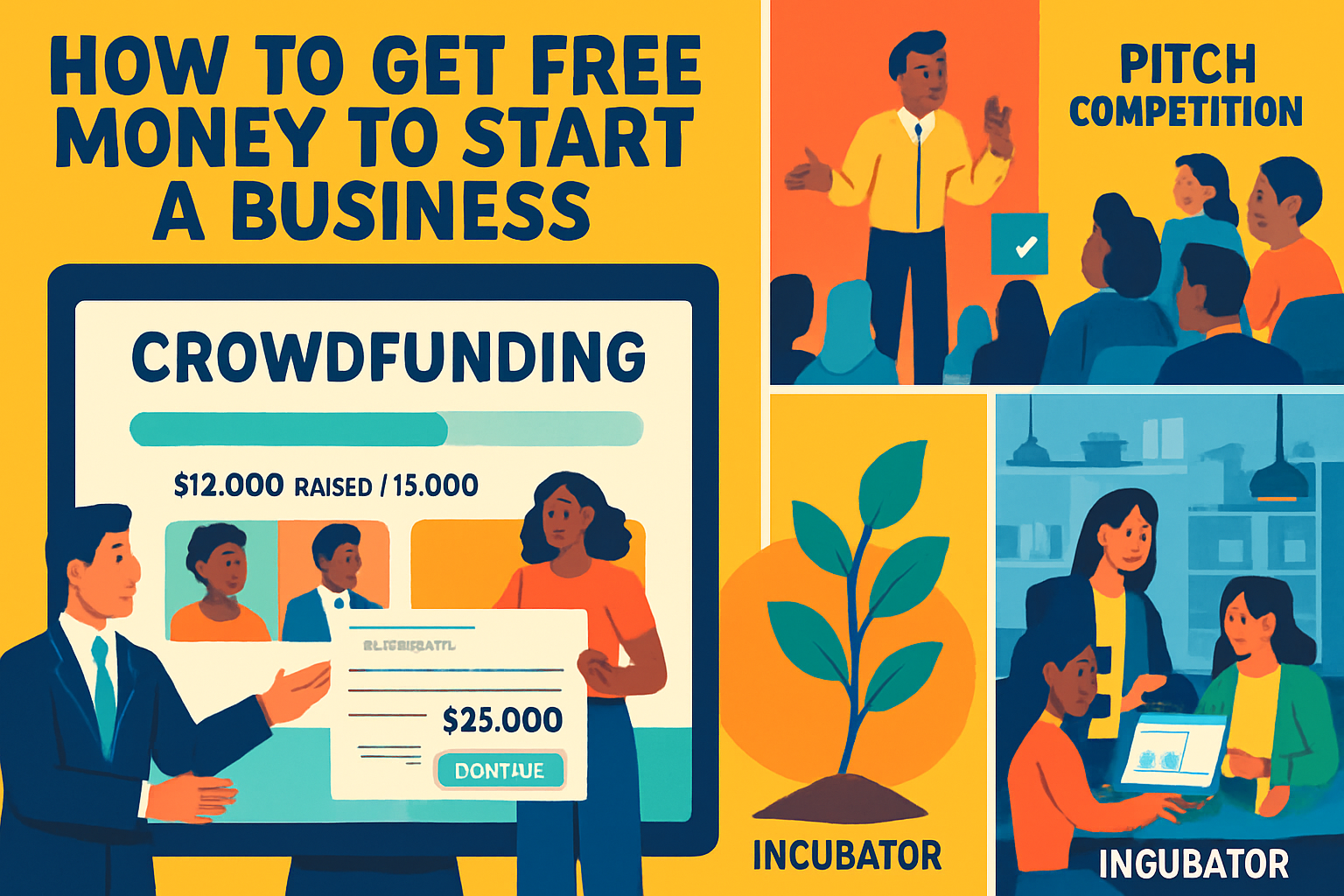
This article aims to dismantle that misconception by exploring the various avenues available on how to get free money to start a business: grants, crowdfunding, and more, empowering you to launch your enterprise without the burden of immediate repayment. By understanding these opportunities, you can transform your entrepreneurial vision into a tangible reality in 2025.
Key Takeaways
- Grants are a prime source of non-dilutive funding: Government, corporate, and non-profit grants offer money that doesn’t need to be repaid and doesn’t require giving up equity.
- Crowdfunding offers community support: Platforms allow you to raise funds from a large number of individuals, often in exchange for rewards or pre-orders, and sometimes even equity.
- Pitch competitions and accelerators provide capital and mentorship: Winning pitch competitions can provide direct funding, while accelerators often offer seed money, resources, and expert guidance without taking a large equity stake upfront.
- Strategic partnerships and sponsorships can provide indirect funding: Leveraging relationships with larger companies or organizations can result in financial support, equipment, or valuable services that reduce startup costs.
- Thorough research and a compelling business plan are crucial: Regardless of the funding source, a well-researched, clearly articulated business plan significantly increases your chances of securing “free money.”
Understanding “Free Money”: Grants and Non-Dilutive Funding
When people talk about “free money” in the business world, they are typically referring to non-dilutive funding. This type of funding is capital that does not require you to give up any ownership (equity) in your company, nor does it typically need to be repaid. This is a crucial distinction from traditional loans or equity investments. For a startup, especially in its early stages, securing non-dilutive funding can be a game-changer, allowing founders to retain full control and ownership while fueling growth.
What Exactly are Business Grants?
Business grants are sums of money given to individuals or organizations to fund a specific project or business activity, usually with a stated public or economic benefit. These funds are awarded by governments, foundations, and corporations based on specific criteria and are not expected to be paid back. Think of them as investments in initiatives that align with the grantor’s mission or objectives. Understanding how to get free money to start a business through grants involves meticulous research and application.
Types of Grants Available in 2025
Navigating the grant landscape requires understanding the different categories. Each type has its own focus, eligibility requirements, and application process.
- Government Grants (Federal, State, Local): These are perhaps the most well-known.
- Federal Grants: The U.S. federal government, for example, offers grants through various agencies like the Small Business Administration (SBA), the Department of Energy, the National Institutes of Health (NIH), and the National Science Foundation (NSF). These grants often target businesses involved in research and development (R&D), innovation, specific industries (e.g., green technology), or those that create jobs in disadvantaged areas. Programs like the Small Business Innovation Research (SBIR) and Small Business Technology Transfer (STTR) are excellent examples, often referred to as “America’s Seed Fund” [1].
- State and Local Grants: Beyond federal programs, individual states, counties, and cities offer grants to stimulate local economies, support specific industries, or address community needs. These might include grants for women-owned businesses, minority-owned businesses, veterans, businesses in rural areas, or those focusing on renewable energy.
- Corporate Grants: Many large corporations establish foundations or philanthropic arms that offer grants to businesses or non-profits aligning with their corporate social responsibility initiatives. For instance, a tech company might offer grants to startups developing innovative educational software, or a food manufacturer might support businesses focused on sustainable agriculture.
- Non-Profit and Foundation Grants: A vast number of non-profit organizations and private foundations exist with specific missions (e.g., environmental protection, arts, social justice, economic development). They often provide grants to businesses whose activities further these missions.
- Industry-Specific Grants: Certain industries, such as healthcare, agriculture, manufacturing, or technology, may have their own grant programs funded by industry associations, government initiatives, or private sector partnerships. Staying informed about your specific industry’s resources is crucial.
Finding Grant Opportunities for Your Business
Discovering relevant grants requires diligent research. Here’s where to look:
- Grants.gov (for Federal Grants): This is the primary portal for finding and applying for federal grants in the U.S. It lists thousands of opportunities across various agencies.
- State and Local Economic Development Websites: Most state and city governments have economic development departments with websites detailing local grant programs and resources.
- Small Business Administration (SBA): While the SBA doesn’t directly offer many grants (except for specific programs like SBIR/STTR), their website is an invaluable resource for connecting with local assistance programs, including Small Business Development Centers (SBDCs) and Women’s Business Centers, which can help identify grant opportunities.
- Foundation Directory Online (FDO): For non-profit and foundation grants, FDO is a comprehensive database, though it often requires a subscription or access through a public library.
- Industry Associations: Professional and trade associations often maintain lists of grants relevant to their sector.
- Online Search Engines: Use specific keywords like “small business grants [your state/city] 2025,” “grants for [your industry],” or “minority business grants.”
Crafting a Winning Grant Application
Securing a grant is competitive, making a well-crafted application essential.
- Understand the Grantor’s Mission: Tailor your application to demonstrate how your business aligns with the grantor’s goals and objectives. Why are they giving money away, and how does your business help them achieve their purpose?
- Clearly Define Your Project: Articulate precisely what your business will achieve with the grant money, including specific deliverables, timelines, and measurable outcomes.
- Develop a Detailed Budget: Present a clear, itemized budget showing exactly how the funds will be spent. Be realistic and justify each expense.
- Showcase Your Team: Highlight the expertise, experience, and passion of your team members. Grantors want to invest in capable hands.
- Demonstrate Impact: Explain the broader impact your business will have—whether it’s job creation, environmental benefits, social improvement, or technological advancement.
- Follow Instructions Meticulously: Grant applications often have strict guidelines. Failure to follow them can lead to immediate disqualification.
- Proofread Thoroughly: Errors undermine professionalism. Have multiple people review your application.
How to Get Free Money to Start a Business: Exploring Beyond Grants
While grants are a fantastic source of non-dilutive funding, they are not the only way to get free money to start a business. Many other avenues exist that provide capital, resources, or services without demanding repayment or equity, or in exchange for non-financial considerations.
Crowdfunding: Funding from the Crowd
Crowdfunding has revolutionized how entrepreneurs raise capital. It involves soliciting small amounts of money from a large number of people, typically via online platforms. While some crowdfunding models involve equity or debt, many fall into the “free money” category by offering rewards or simply seeking donations.
Types of Crowdfunding Relevant to “Free Money”
- Rewards-Based Crowdfunding: This is perhaps the most popular type for startups seeking non-dilutive funding. Backers pledge money in exchange for a tangible reward, which could be a pre-order of your product, an exclusive experience, or merchandise.
- Platforms: Kickstarter and Indiegogo are leading platforms.
- Benefits: Allows you to validate your product or service, build a community, and raise capital without giving up equity.
- Strategy: Offer compelling rewards, create an engaging campaign video, and actively promote your campaign.
- Donation-Based Crowdfunding: Primarily used by charities, non-profits, or individuals for personal causes, this can sometimes apply to social enterprises or businesses with a strong philanthropic mission where people donate purely out of support.
- Platforms: GoFundMe is a prominent example.
- Benefits: Pure capital with no strings attached.
- Strategy: Emphasize the social impact or unique value proposition that inspires donations.
Tips for a Successful Crowdfunding Campaign
- Build a Pre-Launch Audience: Start promoting your idea and building an email list months before your campaign goes live. Engaged followers are more likely to become early backers.
- Create a Compelling Story: People back stories, not just products. Explain your “why,” your passion, and the problem your business solves.
- Set Realistic Goals: An achievable funding goal increases your chances of success and builds momentum.
- Offer Attractive Rewards: Tiers of rewards, from small tokens to high-value items, cater to different backer levels.
- Engage with Backers: Respond to comments, provide updates, and make your backers feel like part of your journey. This builds trust and encourages further sharing.
- Leverage PR and Social Media: Actively promote your campaign across all your channels. Consider reaching out to relevant media outlets or influencers.
Pitch Competitions and Business Contests
Many organizations, universities, and corporations host pitch competitions and business plan contests. These events often award cash prizes, sometimes in the tens or even hundreds of thousands of dollars, to promising startups. These prizes are typically non-dilutive.
How to Find and Win Pitch Competitions
- Search Online: Use keywords like “startup pitch competition 2025,” “business plan contest,” or “innovation challenge” to find local, national, and international opportunities.
- University Programs: Many universities host internal and external competitions.
- Accelerators and Incubators: These programs often culminate in a demo day or pitch event where startups can secure funding.
- Networking: Attend industry events and startup meetups to learn about upcoming competitions.
Crafting a Winning Pitch
- Problem-Solution Fit: Clearly define the problem you’re solving and how your business offers a unique and effective solution.
- Market Opportunity: Demonstrate a significant market for your product or service.
- Business Model: Explain how your business will generate revenue and be sustainable.
- Team: Highlight your team’s expertise, passion, and ability to execute.
- Traction: Show any progress you’ve made (e.g., prototypes, customer feedback, pilot programs).
- Clear Ask: State precisely what you’re seeking (e.g., “We are seeking $X to achieve Y milestone”).
- Practice, Practice, Practice: Rehearse your pitch until it’s concise, compelling, and delivered with confidence. Seek feedback and refine your presentation.
Business Incubators and Accelerators
These programs provide a structured environment to support early-stage startups. While not strictly “free money” in every case, many offer seed funding, mentorship, office space, resources, and networking opportunities in exchange for a small equity stake (often single-digit percentages). The value of the support often far outweighs the equity given, making it an excellent way to bootstrap your business.
Key Features and Benefits
- Seed Funding: Many accelerators provide an initial investment (e.g., $20,000 – $150,000) to cover early expenses.
- Mentorship: Access to experienced entrepreneurs, industry experts, and investors who can guide your growth.
- Resources: Office space, legal support, marketing assistance, and technological infrastructure.
- Networking: Opportunities to connect with potential investors, partners, and customers.
- Structured Curriculum: Workshops and training sessions on various aspects of business development.
Finding the Right Program
- Research: Look for programs that align with your industry, stage of business, and specific needs.
- Reputation: Consider the track record of the program and its alumni.
- Location: Some programs require relocation.
- Application Process: Be prepared for a rigorous application process, often including interviews and pitch presentations.
Strategic Partnerships and Sponsorships
Sometimes, “free money” doesn’t come in the form of direct cash but rather through resources, equipment, or services provided by a strategic partner or sponsor.
- Corporate Sponsorships: Larger companies might sponsor your startup or event if it aligns with their marketing objectives or CSR initiatives. This could mean covering event costs, providing equipment, or offering marketing exposure.
- Partnerships for Resources: A larger company might provide you with access to their technology, distribution channels, or customer base in exchange for a mutually beneficial arrangement. For example, a software company might offer free licenses to promising startups in exchange for case studies or early feedback.
- Co-marketing Agreements: Partner with another business to share marketing costs or leverage each other’s audiences. While not direct money, it saves you marketing expenditure.
For entrepreneurs looking to understand the core principles of starting and growing a successful business, exploring resources like Start Entrepreneur Online can provide foundational knowledge. This platform offers valuable insights for budding entrepreneurs. Furthermore, delving into topics like 17 Key Lessons for Entrepreneurs Starting a Business can equip you with crucial perspectives before seeking funding.
Other Creative Avenues for Non-Dilutive Support
Beyond the major categories, several other creative approaches can help you acquire “free money” or significant non-dilutive support for your startup in 2025. These often require resourcefulness and strong networking skills.
Micro-Grants and Local Initiatives
While federal and large corporate grants are prominent, don’t overlook smaller, local opportunities.
- Community Development Financial Institutions (CDFIs): These are private financial institutions dedicated to delivering responsible, affordable lending to help low-income, low-wealth, and other disadvantaged people and communities join the economic mainstream. Some CDFIs offer micro-grants in addition to loans.
- Local Chambers of Commerce and Business Associations: These organizations are often aware of local grant programs, workshops, and contests. They might also have small funding pools for local businesses.
- University-Based Programs: Beyond accelerators, many universities have innovation centers or entrepreneurship programs that offer small grants or seed funding to students, alumni, or community members with promising business ideas.
- Impact Funds: Some philanthropic funds specifically target businesses that aim to create a positive social or environmental impact.
Government Programs and Tax Credits
Sometimes, the “free money” comes in the form of reduced costs or reimbursements.
- Research and Development (R&D) Tax Credits: If your business is involved in developing new products, processes, or software, you might be eligible for federal and state R&D tax credits, which can significantly reduce your tax burden, effectively freeing up capital.
- Hiring Incentives: Governments often offer incentives or credits for hiring specific groups (e.g., veterans, individuals from disadvantaged areas) or for creating new jobs.
- Export Assistance Programs: If your business plans to export products or services, government agencies might offer grants or assistance to help cover market research, trade show participation, or export-related training.
Bartering and Skill-Based Exchanges
While not direct cash, bartering can significantly reduce your startup costs, freeing up capital you might otherwise spend.
- Service for Service: If you’re a web designer, you could offer to build a website for an accountant in exchange for their bookkeeping services.
- Skill Exchange Platforms: Websites and local groups facilitate skill-based exchanges, helping businesses trade services without monetary transactions.
- Access to Resources: You might barter your expertise for access to office space, equipment, or software licenses.
Angel Investor and Venture Capital Firm “Non-Monetary” Contributions
While angel investors and venture capitalists primarily provide equity funding, early engagement with them can sometimes lead to invaluable non-monetary support that acts like “free money” in terms of saving you costs.
- Mentorship and Strategic Advice: Many investors will offer guidance, connections, and advice even before making an investment, helping you refine your business model or navigate challenges.
- Introductions: Investors have extensive networks and can introduce you to potential customers, partners, or employees.
- Access to Resources: Some investor groups have shared resources or preferred vendor lists that can offer discounts or free services to portfolio companies, even those they are just considering.
To succeed as an entrepreneur, understanding the diverse reasons behind entrepreneurial pursuits can be motivating. The article 101 Reasons Being An Entrepreneur Rocks offers a broad perspective on the rewards and challenges. For further inspiration, insights from successful entrepreneurs are invaluable; consider learning from 5 Successful Startup Entrepreneurs on What to Do First When You Start a Business.
Preparing Your Business for Non-Dilutive Funding Success
Regardless of the “free money” avenue you pursue, certain foundational elements are consistently required to maximize your chances of success. Approaching this systematically will significantly improve your odds in 2025.
Develop a Robust Business Plan
A well-researched, clearly articulated business plan is the cornerstone of any funding application, whether it’s a grant, a pitch competition, or an accelerator program. It demonstrates your understanding of your market, your strategy, and your potential for success.
Key Components of a Business Plan:
- Executive Summary: A concise overview of your entire plan.
- Company Description: What your business does, its mission, vision, and legal structure.
- Market Analysis: In-depth research on your target market, industry trends, competition, and customer segments.
- Organization and Management: Your team, legal structure, and management hierarchy.
- Service or Product Line: Detailed description of what you offer, including intellectual property.
- Marketing and Sales Strategy: How you will reach customers and sell your product/service.
- Funding Request: Exactly how much money you need and how it will be used (crucial for “How to Get Free Money to Start a Business: Grants, Crowdfunding, and More”).
- Financial Projections: Forecasts for sales, profits, cash flow, and balance sheets.
- Appendix: Supporting documents like resumes, permits, patents, etc.
A strong business plan acts as your roadmap and your primary communication tool to potential funders, showcasing your professionalism and preparedness.
Cultivate a Strong Network and Seek Mentorship
The entrepreneurial journey is rarely a solo endeavor. Building a robust network and seeking guidance from experienced mentors can open doors to funding opportunities and provide invaluable advice.
- Networking Events: Attend industry conferences, startup meetups, and local business functions.
- Mentorship Programs: Seek out formal or informal mentorship from seasoned entrepreneurs or industry experts.
- Online Communities: Engage with online forums and groups related to your industry or entrepreneurship.
- Advisory Board: Consider forming an advisory board of experienced individuals who can offer strategic guidance.
Mentors can provide insights into specific grant programs, introduce you to competition organizers, or offer feedback on your pitch deck, significantly boosting your chances of securing non-dilutive funding.
Understand Your Unique Value Proposition
Funders are looking for innovation and differentiation. What makes your business stand out? What unique problem do you solve, or how do you solve an existing problem better than anyone else?
- Identify Your Niche: Clearly define your target customer and the specific segment of the market you serve.
- Articulate Your Solution: Explain how your product or service addresses customer pain points effectively.
- Highlight Your Competitive Advantage: What makes you different from competitors? Is it your technology, your business model, your team, or your unique approach?
A clear and compelling value proposition is essential for grabbing the attention of grant committees, competition judges, and crowdfunding audiences.
Build a Minimum Viable Product (MVP) or Prototype
While some “free money” opportunities target early-stage ideas, having even a basic prototype or Minimum Viable Product (MVP) demonstrates your ability to execute and validates your concept.
- Show, Don’t Just Tell: An MVP provides tangible proof of your concept, making it easier for funders to visualize your potential.
- Gather Feedback: An MVP allows you to collect early customer feedback, which you can use to refine your product and demonstrate traction.
- Validate Demand: Successful initial user engagement with an MVP shows there’s a market for your solution.
This tangible progress can significantly strengthen your applications for grants, accelerators, and pitch competitions, as it shows you’re past the conceptual stage.
Legal and Administrative Readiness
Before applying for any funding, ensure your business is legally and administratively ready.
- Legal Structure: Have your business legally registered (e.g., LLC, Corporation) if required.
- Financial Records: Maintain clear and accurate financial records, even if rudimentary.
- Intellectual Property: Protect your intellectual property through patents, trademarks, or copyrights as appropriate.
- Compliance: Understand and comply with all relevant industry regulations and licensing requirements.
Being prepared legally and administratively signals professionalism and reduces potential hurdles once funding is secured. For those considering the nuances of starting an online business, platforms like Start Entrepreneur Online offer tailored resources.
Conclusion
The journey to entrepreneurship, particularly in 2026, no longer needs to be solely paved with personal savings or crippling debt. The world is rich with opportunities for how to get free money to start a business: grants, crowdfunding, and more. From the structured support of government and corporate grants to the community power of crowdfunding, the competitive spirit of pitch competitions, and the nurturing environments of incubators and accelerators, diverse avenues exist to secure non-dilutive capital.
Success in acquiring this “free money” hinges on preparation, persistence, and clarity. A robust business plan, a compelling story, a keen understanding of your market, and a well-articulated value proposition are paramount. Furthermore, building a strong network, seeking mentorship, and demonstrating tangible progress through prototypes or MVPs will significantly enhance your appeal to potential funders.
The actionable next steps for any aspiring entrepreneur looking to tap into these resources in 2025 include:
- Deep Dive into Research: Begin by thoroughly researching grant opportunities specific to your industry, location, and business type. Explore Grants.gov, state economic development sites, and industry associations.
- Develop a Stellar Business Plan: Craft a comprehensive and convincing business plan that outlines every aspect of your venture. This document will be your foundation for all applications.
- Build Your Online Presence: Create a professional website and social media presence that clearly communicates your business idea and progress. This is vital for crowdfunding and attracting attention.
- Network Actively: Attend industry events, join entrepreneurial groups, and seek out mentors. Connections can lead to invaluable advice and direct funding opportunities.
- Start Small and Iterate: Don’t wait for a huge grant. Consider a smaller crowdfunding campaign or local pitch competition to gain experience, validation, and initial capital.
Embrace the challenge, stay persistent, and strategically explore the myriad options available. Your entrepreneurial dream, supported by “free money,” is well within reach in 2025.
References
[1] U.S. Small Business Administration. (n.d.). SBIR/STTR Programs – America’s Seed Fund. Retrieved from https://www.sbir.gov/
Discover more from Start Entrepreneur Online
Subscribe to get the latest posts sent to your email.