

Imagine waking up, grabbing a cup of coffee, and walking a few steps to your dedicated workspace – all while still in your pajamas. This isn’t just a dream; for millions, it’s the reality of starting a small business from home.
The allure of being your own boss, setting your own hours, and building something truly yours has never been stronger, especially as technology makes remote work more accessible than ever in 2026.
This comprehensive guide will walk you through every essential step, providing a complete beginner’s guide to successfully launching and growing your home-based venture.
Key Takeaways
- Idea Validation & Business Planning: Begin with a solid, well-researched business idea and transform it into a robust business plan, including market analysis and financial projections.
- Legal & Financial Foundations: Properly register your business, understand legal structures, secure necessary licenses, and set up clear financial systems from the start.
- Setting Up Your Home Office: Create a dedicated, productive workspace at home, ensuring it meets both your personal needs and any professional or legal requirements.
- Marketing & Customer Acquisition: Develop a strong brand, utilize digital marketing strategies, and provide exceptional customer service to attract and retain clients.
- Scaling & Growth: Continuously evaluate your business, adapt to market changes, and explore opportunities for sustainable growth and expansion.
Laying the Groundwork: Idea, Plan, and Legalities for Your Home Business
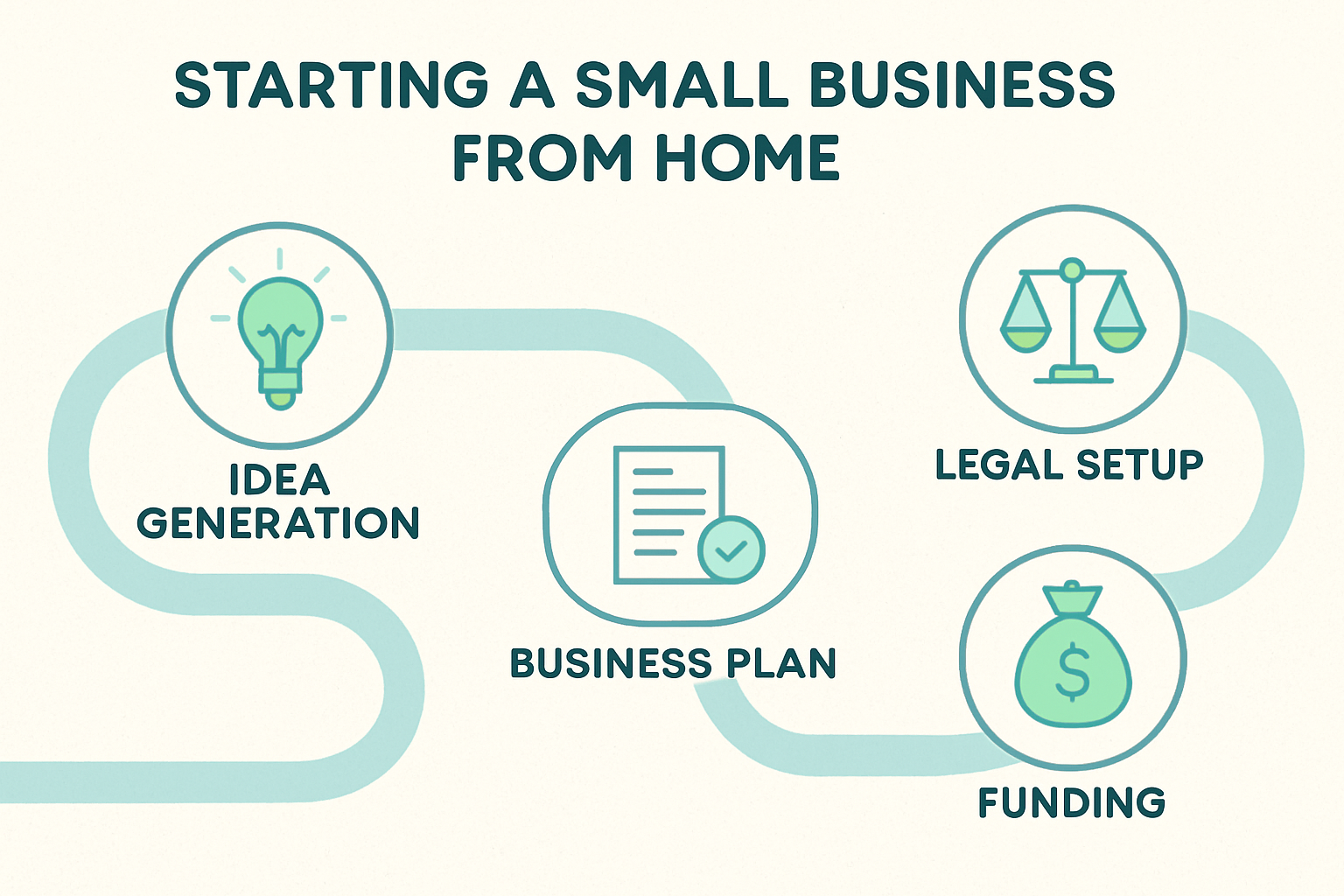
Starting a small business from home offers an incredible blend of flexibility and potential, but success hinges on a solid foundation. This section of our complete beginner’s guide focuses on transforming your initial idea into a concrete plan, understanding the legal landscape, and preparing for the financial aspects of your new venture.
Discovering Your Niche: The Power of a Great Idea
Every successful business begins with an idea – but not just any idea. It needs to be an idea that solves a problem, fills a gap in the market, or offers a unique value proposition. Think about what you’re passionate about, what skills you possess, and what problems you’ve noticed in your community or online.
- Passion Meets Market Need: Consider Sarah, who loved baking gluten-free treats but struggled to find high-quality options locally. She turned her passion into a home-based bakery, selling online and at farmers’ markets. Her passion made the long hours enjoyable, and her understanding of the market need ensured she had eager customers.
- Skill-Based Businesses: Perhaps you’re a skilled graphic designer, a fantastic writer, a meticulous bookkeeper, or a wizard with social media. These skills are highly valuable and can be easily translated into a service-based home business.
- Product-Based Ventures: Do you have a knack for crafting handmade jewelry, creating unique digital prints, or even dropshipping trendy products? Product-based businesses can thrive from a home base.
Brainstorming and Validation:
Don’t just jump into the first idea that comes to mind. Take time to brainstorm several possibilities. Once you have a few, it’s crucial to validate them. This means:
- Market Research: Who are your potential customers? What are their needs? Is there enough demand for your product or service? Look at existing competitors – what do they do well, and where can you differentiate? Tools like Google Trends, social media listening, and competitor websites can offer insights.
- Problem-Solving: Does your idea solve a genuine problem for your target audience? People pay for solutions, not just products.
- Feasibility: Can you realistically deliver this product or service from home? Do you have the necessary skills, time, and resources?
A great way to approach this initial phase is to think like an entrepreneur. You can explore 17 Key Lessons for Entrepreneurs Starting a Business to gain valuable insights that will help refine your initial ideas.
Crafting Your Blueprint: The Essential Business Plan
Once you have a validated idea, the next critical step in starting a small business from home is to write a business plan. Think of it as your roadmap. It doesn’t have to be a 50-page corporate document, but a concise, living document that guides your decisions.
Key Components of a Business Plan:
- Executive Summary: A brief overview of your business, its mission, and its goals.
- Company Description: What your business does, its values, and what makes it unique.
- Market Analysis: Detailed research on your target market, industry trends, and competitive landscape. Who are your ideal customers? How large is the market?
- Organization and Management: Your business structure (sole proprietor, LLC, etc.) and information about you (the owner) and any key personnel.
- Service or Product Line: Detailed description of what you sell, its benefits, and its lifecycle.
- Marketing and Sales Strategy: How you will reach your target customers, promote your products/services, and make sales.
- Funding Request (if applicable): If you need external funding, this section outlines how much you need and how you’ll use it.
- Financial Projections: Crucial for any business. This includes startup costs, projected profit and loss statements, cash flow analysis, and break-even analysis. Be realistic!
Why a Business Plan Matters:
A business plan forces you to think through every aspect of your venture. It helps identify potential challenges and opportunities, ensures you have a clear strategy, and can be vital if you seek funding. Even if you’re self-funding, it’s an invaluable tool for clarity and direction. Remember, a well-thought-out plan sets the stage for success and can be one of the 10 ways to become a successful entrepreneur.
Navigating the Legal Landscape: Registrations and Regulations
Many beginners overlook the legal aspects, but they are crucial for protecting your personal assets and ensuring your business operates lawfully. This is a vital part of starting a small business from home.
1. Choosing a Business Structure:
This is one of the first decisions you’ll make. Common structures for home-based businesses include:
- Sole Proprietorship: Simplest and most common for single-owner businesses. Easy to set up, but offers no legal separation between you and your business. You are personally liable for all business debts and obligations.
- Limited Liability Company (LLC): Offers personal liability protection (separates personal assets from business debts) while providing flexibility in taxation. More complex to set up than a sole proprietorship, but often worth the effort for the added protection.
- Partnership: If you’re starting with one or more partners.
- Corporation (S-Corp, C-Corp): More complex and generally suited for larger businesses, but offers robust liability protection.
2. Registering Your Business Name:
Even as a sole proprietorship, you might want to operate under a name different from your own. This is often called a “Doing Business As” (DBA) or “Fictitious Name” registration. You’ll register this with your state or local government.
3. Obtaining an Employer Identification Number (EIN):
If you plan to hire employees or if your business is structured as a corporation or partnership, you’ll need an EIN from the IRS [1]. Even sole proprietors can get an EIN, which can be useful for separating business and personal finances and for certain banking activities, though it’s not strictly required unless you have employees.
4. Licenses and Permits:
This is where it gets highly specific to your location and industry.
- Federal: Some industries require federal licenses (e.g., selling alcohol, firearms).
- State: Most states require a general business license. Specific professions (e.g., therapists, contractors) often need state professional licenses.
- Local (City/County): This is where home-based businesses face the most scrutiny. You may need a local business operating license, a home occupation permit, or zoning approval to ensure your business doesn’t violate residential zoning laws. For example, some cities have rules about customer traffic or noise levels for home businesses. Always check with your local planning or business licensing office.
5. Understanding Taxes:
As a business owner, you’ll be responsible for various taxes:
- Income Tax: You’ll typically report business income and expenses on your personal tax return (Schedule C for sole proprietors/LLCs taxed as sole proprietors).
- Self-Employment Tax: This covers Social Security and Medicare contributions.
- Sales Tax: If you sell physical products, you’ll likely need to collect and remit sales tax to your state.
- Estimated Taxes: Since taxes aren’t withheld from your income as an employee, you’ll usually need to pay estimated quarterly taxes.
Consider consulting with an accountant or tax professional early on. They can help you navigate these complexities and ensure you’re compliant.
Financial Fundamentals: Funding and Banking
Securing funding and setting up proper financial management are critical for the longevity of your home business.
1. Funding Your Business:
- Self-Funding (Bootstrapping): Many home-based businesses start this way, using personal savings or existing income to cover initial costs. This minimizes debt and gives you full control.
- Friends and Family: A common source for early-stage capital. Be sure to treat it professionally with clear loan agreements.
- Small Business Loans: Banks, credit unions, and online lenders offer various loan products. The Small Business Administration (SBA) also guarantees loans, making it easier for small businesses to qualify.
- Grants: Less common for general home businesses, but some industries or demographics may qualify for specific grants.
- Crowdfunding: Platforms like Kickstarter or Indiegogo can be effective for product-based businesses with compelling stories.
2. Setting Up Business Banking:
This is non-negotiable for starting a small business from home.
- Open a Separate Business Bank Account: Crucial for separating personal and business finances. This simplifies accounting, makes tax preparation easier, and protects your personal assets if you have an LLC or corporation.
- Consider a Business Credit Card: Can help build business credit, track expenses, and manage cash flow, but use it responsibly.
- Payment Processing: If you’re selling online, you’ll need a way to accept payments (e.g., Stripe, PayPal, Square).
Anecdote: When David started his graphic design business from his spare bedroom, he initially used his personal checking account. After a year, tax time was a nightmare! Receipts were mixed, and proving business expenses was a constant struggle. The next year, he opened a dedicated business account, and suddenly, his financial life was streamlined. It made a huge difference in his ability to track profitability and plan for growth.
Proper financial management from day one is one of the 9 tips for growing a successful business. It allows you to understand your cash flow, manage expenses, and make informed decisions about your business’s future.
Preparing for the Future: Insurance
Don’t overlook business insurance. Even a home-based business carries risks.
- General Liability Insurance: Protects your business from claims of bodily injury or property damage that occur on your business premises or due to your business operations. If clients visit your home, this is essential.
- Professional Liability Insurance (Errors & Omissions): If you provide services (consulting, design, coaching), this protects you from claims of negligence, errors, or omissions in your professional advice or services.
- Product Liability Insurance: If you sell physical products, this covers claims of injury or damage caused by your product.
- Home-Based Business Endorsement: Your homeowner’s insurance policy likely won’t cover business-related losses. Many insurers offer a rider or separate policy specifically for home-based businesses.
Consult with an insurance broker to understand the specific risks for your type of business and ensure you have adequate coverage.
Building and Growing: Operations, Marketing, and Scaling Your Home Business
Once the foundational elements are in place, the real work of building and growing your home-based business begins. This section of our complete beginner’s guide explores setting up your workspace, reaching your customers, and planning for sustainable growth.
Creating Your Productive Hub: The Home Office
Your home office isn’t just a place to work; it’s the operational heart of your small business. Setting it up effectively is crucial for productivity, professionalism, and maintaining a healthy work-life balance.
1. Designating a Dedicated Space:
- Physical Separation: Ideally, choose a room or a distinct corner that can be exclusively used for business. This helps with focus and can also have tax advantages (home office deduction) [2].
- Minimize Distractions: Set up your space away from high-traffic areas of your home. If you have kids or pets, consider soundproofing or setting clear boundaries during work hours.
- Professional Appearance: Even if clients don’t visit, ensure your background for video calls is tidy and professional. A simple backdrop can go a long way.
2. Essential Equipment and Technology:
- Reliable Computer: A fast, dependable computer is non-negotiable for most home businesses in 2025.
- High-Speed Internet: Your connection is your lifeline. Invest in a robust internet plan.
- Printer/Scanner: Essential for documents, invoices, and record-keeping.
- Phone System: A separate business line (even a virtual one) helps maintain professionalism and keeps personal and business calls separate.
- Software:
- Productivity Suites: Google Workspace or Microsoft 365 for documents, spreadsheets, and presentations.
- Communication Tools: Zoom, Slack, or Microsoft Teams for virtual meetings and team collaboration (if applicable).
- Accounting Software: QuickBooks, FreshBooks, or Xero to manage finances, invoicing, and expenses.
- CRM (Customer Relationship Management): HubSpot, Zoho CRM for managing customer interactions and sales leads.
- Project Management: Trello, Asana, Monday.com to keep tasks organized.
- Website Platform: Shopify, WordPress with WooCommerce, Squarespace, or Wix if you’re selling products or need a professional online presence. Learn about 3dcart review: simple ecommerce solution if you’re exploring e-commerce options.
3. Ergonomics and Comfort:
- Good Chair: Invest in an ergonomic chair to protect your back and maintain comfort during long hours.
- Proper Desk Height: Ensure your desk and monitor are at appropriate heights to prevent strain.
- Lighting: Natural light is best, but supplement with good task lighting to reduce eye strain.
4. Organization and Storage:
- Digital Organization: Implement a robust digital filing system for documents, customer data, and marketing materials.
- Physical Organization: Keep your workspace tidy. Use shelves, filing cabinets, and drawers to store supplies and physical documents. A cluttered space often leads to a cluttered mind.
Anecdote: Maria, a virtual assistant, initially worked from her kitchen table, constantly shifting papers for meals. She felt disorganized and unprofessional. After converting a small unused closet into a compact, dedicated office nook, complete with a small desk and shelving, her productivity soared. She even felt more confident on video calls, knowing her background was consistently professional.
Reaching Your Audience: Marketing and Sales Strategies
Having a great product or service is only half the battle. People need to know about it! Effective marketing is paramount for starting a small business from home.
1. Defining Your Brand:
- Brand Identity: What is your business’s personality? What message do you want to convey? This includes your logo, color palette, typography, and tone of voice.
- Unique Selling Proposition (USP): What makes you different and better than the competition? This is what you’ll highlight in all your marketing.
- Target Audience: Revisit your market research. Who are you trying to reach? Understanding them intimately will shape your marketing messages.
2. Building an Online Presence:
In 2025, an online presence is non-negotiable for almost every business.
- Professional Website: Your website is your digital storefront. It should be easy to navigate, mobile-friendly, clearly state your offerings, and include strong calls to action.
- Search Engine Optimization (SEO): Ensure your website is optimized to rank in search engines (like Google) for relevant keywords. This means using good content, proper titles, and fast loading speeds.
- Social Media Marketing: Identify which platforms your target audience uses most (Facebook, Instagram, LinkedIn, TikTok, X, Pinterest, etc.). Create engaging content, interact with your followers, and consider paid social media ads.
- Email Marketing: Build an email list and send regular newsletters, promotions, or valuable content. This is one of the most effective ways to nurture leads and retain customers.
- Content Marketing: Create valuable blog posts, videos, podcasts, or infographics that address your audience’s pain points and showcase your expertise.
3. Traditional and Local Marketing:
Don’t forget offline strategies, especially if your business has a local focus.
- Local SEO: Optimize your Google My Business profile so customers can find you in local searches.
- Networking: Join local business groups, chambers of commerce, or industry associations.
- Word-of-Mouth Referrals: Encourage satisfied customers to spread the word. Offer incentives for referrals.
- Flyers/Brochures: If relevant to your local market.
4. Sales Strategy:
- Clear Pricing: Make your pricing structure easy to understand.
- Sales Funnel: Understand the journey your customer takes from awareness to purchase.
- Customer Service: Excellent customer service builds trust and loyalty. Respond promptly to inquiries, resolve issues efficiently, and strive to exceed expectations.
To further your marketing knowledge, consider exploring 7 techniques to take your business storytelling. Storytelling is a powerful tool to connect with your audience.
Operations and Management: Keeping Things Running Smoothly
Efficient operations are the backbone of a successful home business.
- Time Management: As your own boss, you need discipline. Use tools like calendars, to-do lists, and time-tracking apps (you might find 6 best time tracking software for solar installation businesses helpful for general time management principles) to manage your schedule. Avoid procrastination.
- Customer Relationship Management (CRM): Keep track of customer interactions, preferences, and sales history.
- Inventory Management (for product businesses): Track stock levels, manage suppliers, and streamline order fulfillment.
- Legal Compliance: Stay updated on any changes to licenses, permits, or regulations.
- Record-Keeping: Maintain meticulous records of all income, expenses, invoices, and communications. This is essential for taxes and business analysis.
Scaling Your Home Business: Growth Strategies
Once your business is stable, you’ll naturally start thinking about growth.
- Expand Product/Service Offerings: Introduce new products or services that align with your existing business and customer needs.
- Reach New Markets: Can you expand geographically, or target a different demographic?
- Hire Help: As demand grows, you might need to hire freelancers, virtual assistants, or even part-time employees. Start with tasks that consume a lot of your time but don’t require your unique expertise.
- Automate Processes: Look for ways to automate repetitive tasks using software (e.g., email marketing automation, scheduling tools).
- Optimize Marketing: Invest more in marketing channels that have proven effective.
- Continuous Learning: The business world is constantly evolving. Stay informed about industry trends, new technologies, and business strategies. This might include listening to 20 podcasts that will make you a better entrepreneur.
Pull Quote:
“The biggest risk is not taking any risk… In a world that’s changing really quickly, the only strategy that is guaranteed to fail is not taking risks.” – Mark Zuckerberg
Looking Ahead to 2025 and Beyond:
The landscape for home-based businesses is dynamic. Emerging technologies like AI, enhanced e-commerce platforms, and sophisticated digital marketing tools continue to offer new avenues for growth. Staying agile and open to innovation will be key to long-term success. The current year, 2025, presents a fantastic opportunity for entrepreneurs to leverage these advancements.
Conclusion
Starting a small business from home in 2025 is an exciting and achievable goal for anyone willing to put in the effort and planning. From the initial spark of an idea to establishing a thriving online presence and scaling your operations, the journey requires dedication, learning, and adaptability. This complete beginner’s guide has walked you through the critical steps, from validating your business concept and crafting a robust business plan to navigating legal requirements, setting up a productive home office, and implementing effective marketing strategies.
Remember that every successful entrepreneur started somewhere, often with more questions than answers. The key is to take consistent, informed action. Embrace the challenges as learning opportunities and celebrate every small victory along the way. Your home-based business isn’t just a source of income; it’s a testament to your vision, resilience, and entrepreneurial spirit.
Actionable Next Steps:
- Refine Your Idea: Spend time brainstorming and validating at least three potential business ideas.
- Draft a Lean Business Plan: Create a concise, one-page business plan outlining your core concept, target market, and revenue model.
- Research Local Regulations: Contact your city or county clerk’s office to inquire about specific home-based business licenses and zoning requirements in your area.
- Set Up Dedicated Finances: Open a separate business bank account and explore accounting software options.
- Create Your Workspace: Designate and organize a specific area in your home solely for business activities.
The journey of starting a small business from home is incredibly rewarding. With this guide, you now have the foundational knowledge to embark on your entrepreneurial adventure with confidence.
References
[1] Internal Revenue Service. Do You Need an EIN? Retrieved from https://www.irs.gov/businesses/small-businesses-self-employed/do-you-need-an-ein
[2] Internal Revenue Service. Home Office Deduction. Retrieved from https://www.irs.gov/businesses/small-businesses-self-employed/home-office-deduction
Discover more from Start Entrepreneur Online
Subscribe to get the latest posts sent to your email.