

Embarking on the entrepreneurial journey is both exhilarating and daunting. In the dynamic business landscape, transforming a nascent idea into a thriving startup requires more than just passion—it demands strategic planning, unwavering dedication, and a clear roadmap.
This Ultimate Guide to Starting a Startup: From Idea to Launch is designed to demystify the process, providing aspiring entrepreneurs with the essential knowledge and actionable steps needed to navigate the complex world of startup creation, from the initial spark of an idea to the exciting moment of launch and beyond.
Key Takeaways
- Idea Validation is Paramount: Before investing significant resources, thoroughly validate your startup idea to ensure it addresses a real market need and has a viable customer base.
- A Solid Business Plan is Your Blueprint: Develop a comprehensive business plan that outlines your vision, strategies, operations, and financial projections to guide your startup’s development.
- Secure the Right Funding: Understand various funding options, from bootstrapping to venture capital, and strategically choose the best fit for your startup’s needs and growth trajectory.
- Focus on a Minimum Viable Product (MVP): Prioritize developing an MVP to quickly test core assumptions, gather early user feedback, and iterate efficiently.
- Build a Strong, Adaptable Team: Surround yourself with individuals who share your vision, possess complementary skills, and can adapt to the inevitable challenges of startup life.
The Genesis of an Idea: Identifying Opportunities and Problems
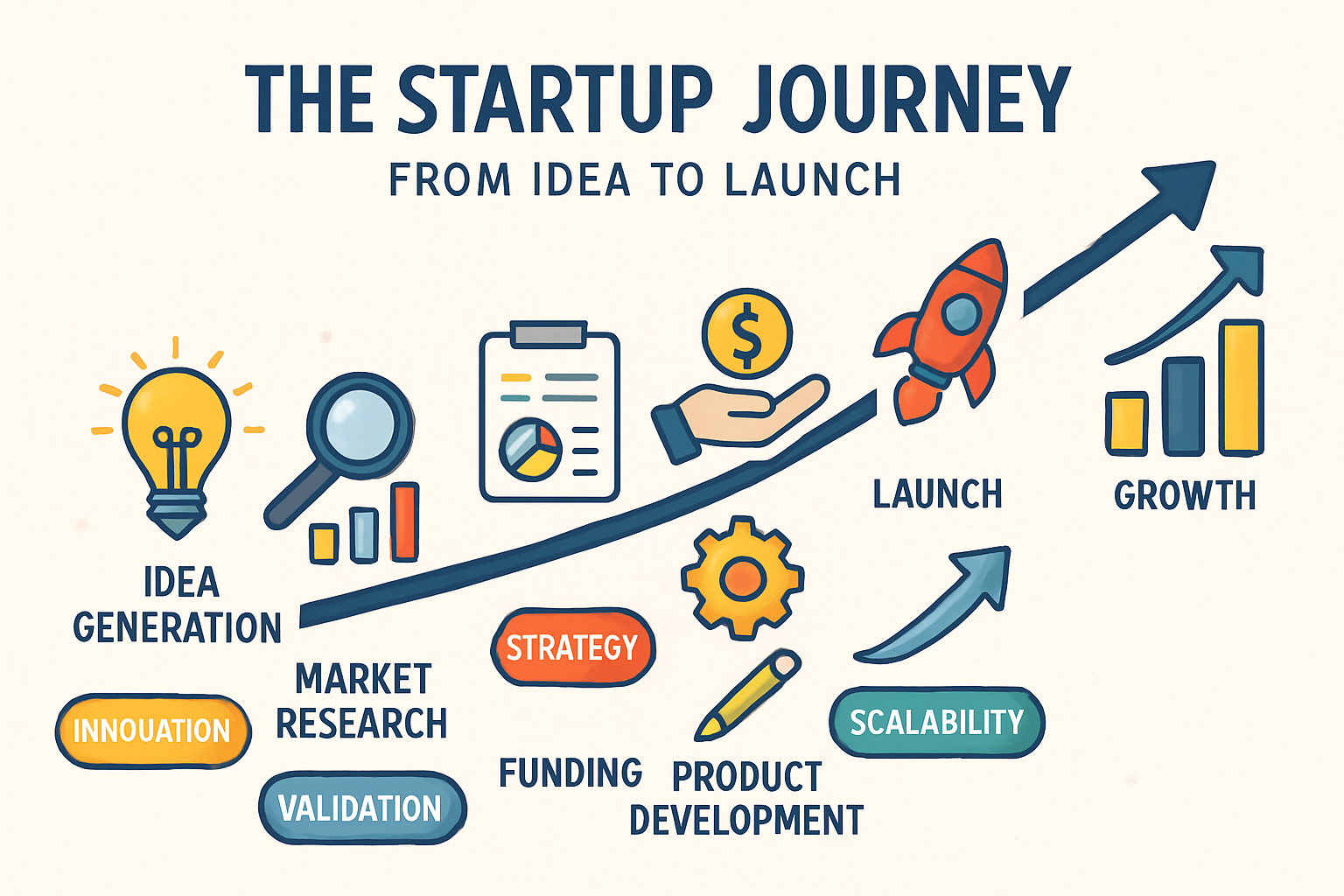
Every successful startup begins with an idea—often born from identifying a problem that needs solving or an unmet need in the market. The ability to spot these opportunities is a cornerstone of entrepreneurship. In 2025, with rapid technological advancements and evolving consumer behaviors, new niches and challenges are constantly emerging.
Where Do Great Ideas Come From?
Great ideas rarely appear out of thin air. They typically stem from:
- Personal Experiences: What challenges have you or people you know faced? Solutions to these personal pain points can often resonate with a wider audience.
- Observation: Pay close attention to trends, frustrations expressed by others, and inefficiencies in existing products or services.
- Industry Gaps: Are there services or products that current market leaders are overlooking? Can you offer a better, cheaper, or more convenient alternative?
- Technological Advancements: New technologies (like AI, blockchain, or virtual reality) frequently open doors for entirely new categories of businesses. For instance, understanding the 17 Blockchain Applications That Are Transforming Society could spark numerous startup ideas.
- Solving Existing Problems: The most robust startup ideas often address genuine pain points for a specific group of people.
Idea Validation: Is Your Idea Viable?
Once you have an idea, the next crucial step is validation. This means testing your assumptions to ensure there’s a real demand for your solution. Without validation, you risk building something nobody wants.
Key Validation Steps:
- Define the Problem: Clearly articulate the problem you’re trying to solve. Who experiences this problem? How often? How severe is it?
- Identify Your Target Audience: Who would benefit most from your solution? Be as specific as possible. This helps in understanding their needs and behaviors.
- Research Existing Solutions: What are people currently doing to solve this problem? What are the shortcomings of these solutions? Your goal isn’t necessarily to be completely unique, but to offer a better alternative.
- Conduct Interviews and Surveys: Talk to potential customers. Ask open-ended questions about their problems, current solutions, and willingness to pay for a better one. This qualitative data is invaluable.
- Build a Landing Page: Create a simple webpage describing your product/service and offer a sign-up for early access or updates. This can gauge interest and build an early audience.
- Analyze Data and Iterate: Based on your research, refine your idea. Be prepared to pivot or even discard an idea if the validation feedback is overwhelmingly negative. Remember, the goal is to save time and resources.
This initial phase is critical for any entrepreneur embarking on the Ultimate Guide to Starting a Startup: From Idea to Launch.
Market Research: Understanding Your Landscape
With a validated idea, the next step in our Ultimate Guide to Starting a Startup: From Idea to Launch is to conduct thorough market research. This isn’t just about understanding your potential customers, but also about analyzing your competitors and the broader industry trends that will impact your startup.
Defining Your Target Market
Your target market is the specific group of consumers or businesses that your product or service aims to serve. Understanding them deeply is vital.
Factors to Consider:
- Demographics: Age, gender, income, education, occupation, family status.
- Psychographics: Lifestyle, values, interests, opinions, personality traits.
- Geographics: Location, region, urban/rural.
- Behaviors: Purchasing habits, brand loyalty, usage rates.
By segmenting your market, you can tailor your product, marketing messages, and sales strategies more effectively.
Competitor Analysis
No business operates in a vacuum. Identifying and analyzing your competitors helps you understand the market landscape, identify opportunities for differentiation, and anticipate challenges.
What to Analyze About Competitors:
- Products/Services: What do they offer? What are their features, benefits, and pricing?
- Strengths & Weaknesses: Where do they excel? Where do they fall short?
- Marketing & Sales Strategies: How do they reach their customers? What are their key messages?
- Market Share: How much of the market do they control?
- Customer Reviews: What do customers like and dislike about their offerings?
Performing a SWOT (Strengths, Weaknesses, Opportunities, Threats) analysis on your key competitors and your own startup can provide a clear strategic overview.
Industry Trends and Future Outlook
The business world is constantly changing, especially in 2025. Keeping an eye on broader industry trends is crucial for long-term planning and adapting your strategy.
Considerations:
- Technological Shifts: Are there new technologies that could impact your industry?
- Economic Factors: How do economic conditions (e.g., inflation, consumer spending power) affect your market?
- Regulatory Changes: Are there new laws or regulations on the horizon that could impact your operations?
- Social and Cultural Shifts: How are consumer values and behaviors evolving?
Thorough market research provides the intelligence needed to make informed decisions, mitigate risks, and position your startup for success.
Crafting Your Business Plan: The Startup’s Blueprint
A well-structured business plan is more than just a document; it’s your startup’s strategic roadmap. It outlines your goals, how you plan to achieve them, and what resources you’ll need. For anyone following this Ultimate Guide to Starting a Startup: From Idea to Launch, this step is non-negotiable, particularly if you’re seeking external funding.
Key Components of a Comprehensive Business Plan
While a business plan can vary in length and detail, it should generally include the following sections:
- Executive Summary: A concise overview of your entire business plan. It should grab the reader’s attention and highlight key aspects of your startup, its mission, product, market, and financial projections.
- Company Description: Detail your company’s mission statement, vision, values, legal structure, and a brief history if applicable. What problem do you solve, and what makes your solution unique?
- Market Analysis: Based on your earlier research, present your target market, market size, trends, and a thorough competitor analysis. This demonstrates your understanding of the landscape.
- Organization & Management: Describe your organizational structure, key team members (with their roles and expertise), and your management philosophy. Highlighting your team’s strengths is crucial for investors. For insights on building a successful team, consider exploring resources like 10 Ways to Become a Successful Entrepreneur.
- Service or Product Line: Detail your product or service, its features, benefits, unique selling proposition (USP), and intellectual property (if any). Discuss future development plans.
- Marketing & Sales Strategy: Explain how you will reach your target customers, generate leads, and convert them into sales. Include pricing strategy, distribution channels, and promotional activities.
- Funding Request (if applicable): If you’re seeking funding, specify the amount you need, how you’ll use it, and your repayment or exit strategy.
- Financial Projections: Provide detailed financial forecasts, including projected income statements, balance sheets, and cash flow statements for the next 3-5 years. Include assumptions used to arrive at these figures.
The Lean Startup Approach and Business Plans
While a traditional, detailed business plan is valuable, some entrepreneurs favor a “lean startup” approach. This involves creating a shorter, more agile Business Model Canvas, which focuses on key elements like customer segments, value propositions, channels, customer relationships, revenue streams, key activities, key resources, key partnerships, and cost structure. This allows for rapid iteration and adaptation, which can be beneficial in the early stages.
Regardless of the format, the process of creating a business plan forces you to think critically about every aspect of your startup, identify potential challenges, and strategize for growth.
Funding Your Vision: Securing Capital
Money makes the startup world go round. Securing adequate capital is often one of the biggest hurdles for new entrepreneurs. This section of our Ultimate Guide to Starting a Startup: From Idea to Launch explores the various funding options available to help you bring your vision to life in 2025.
Common Startup Funding Sources
- Bootstrapping: Using your own savings, credit cards, or revenue generated from early sales to fund your startup.
- Pros: Retain full control and equity, fosters financial discipline.
- Cons: Limited capital, slower growth, higher personal risk.
- Friends and Family: Soliciting investments or loans from your personal network.
- Pros: Often more flexible terms, easier to secure.
- Cons: Can strain personal relationships, limited capital.
- Angel Investors: High-net-worth individuals who provide capital for startups, often in exchange for ownership equity. They typically invest in earlier-stage companies.
- Pros: Provide mentorship and industry connections, can be faster than VCs.
- Cons: Give up equity, may require significant due diligence.
- Venture Capital (VC) Firms: Investment firms that provide capital to startups with high growth potential, usually in exchange for equity. VCs typically invest larger sums than angel investors and often prefer later-stage companies.
- Pros: Significant capital, strategic guidance, strong network.
- Cons: High equity dilution, intense scrutiny, high growth expectations.
- Crowdfunding: Raising small amounts of capital from a large number of individuals, typically through online platforms.
- Pros: Access to a broad base of potential investors/customers, market validation.
- Cons: Requires significant marketing effort, not all campaigns succeed.
- Bank Loans and Government Grants: Traditional loans from financial institutions or grants from government programs.
- Pros: No equity dilution (loans), non-repayable (grants).
- Cons: Strict eligibility criteria, lengthy application processes, collateral often required for loans.
Preparing for Funding
Regardless of the source, you’ll need to be prepared to present your startup professionally. This involves:
- A Solid Business Plan: As discussed, this is non-negotiable.
- Financial Projections: Clear, realistic, and defensible forecasts.
- Pitch Deck: A concise, visually appealing presentation summarizing your business plan.
- Strong Team: Investors often invest in the team as much as the idea.
- Legal Documents: Understand the legal implications of taking on investment, including equity agreements and term sheets.
Choosing the right funding strategy depends on your startup’s stage, industry, growth potential, and how much control you’re willing to give up. For more perspectives on becoming a successful entrepreneur, consider visiting Start Entrepreneur Online.
Developing Your Product/Service: From Concept to MVP
With a solid idea, market understanding, and potentially some funding, the next critical step in this Ultimate Guide to Starting a Startup: From Idea to Launch is developing your product or service. The key here is not to build a perfect, fully-featured offering from day one, but to focus on a Minimum Viable Product (MVP).
What is a Minimum Viable Product (MVP)?
An MVP is the version of a new product that allows a team to collect the maximum amount of validated learning about customers with the least amount of effort [1]. It’s about building just enough features to satisfy early customers and provide feedback for future product development.
Benefits of an MVP:
- Faster Time to Market: Get your product into users’ hands quickly.
- Validated Learning: Gather real-world user feedback to refine your product.
- Reduced Risk: Avoid investing heavily in features that users don’t want or need.
- Cost-Effective: Minimize development costs and resource allocation.
- Attract Early Adopters: Build a community of passionate users who can become advocates.
The MVP Development Process
- Define Core Features: Based on your idea validation and market research, identify the absolute essential features that solve the primary problem for your target users. What is the single most important thing your product must do?
- Design and Prototype: Create wireframes, mockups, and prototypes to visualize your product’s user interface (UI) and user experience (UX). This helps in communicating your vision and gathering early feedback on design.
- Build: Develop the core functionality. This might involve coding, manufacturing, or service setup. Focus on functionality over aesthetics at this stage, but ensure it’s usable.
- Test: Rigorously test your MVP for bugs, usability issues, and performance. Conduct internal testing and, if possible, involve a small group of beta testers.
- Launch (Soft Launch): Release your MVP to a limited audience. This could be your early sign-ups from the validation stage, a specific community, or a regional launch.
- Gather Feedback and Iterate: Actively listen to user feedback. Use surveys, interviews, and analytics to understand how users interact with your product. What works? What doesn’t? What features are requested most? This feedback loop is crucial for the continuous improvement of your product. This iterative approach is a cornerstone of the lean startup methodology.
Developing an MVP is an ongoing cycle of build, measure, and learn. It allows you to adapt and evolve your product based on actual user needs, rather than assumptions.
Launching Your Startup: Making Your Debut
The launch is a thrilling milestone in this Ultimate Guide to Starting a Startup: From Idea to Launch. It’s the moment your product or service officially enters the market. A successful launch isn’t just about releasing your offering; it’s about making an impactful debut that captures attention and attracts your initial users or customers.
Pre-Launch Checklist
Before you hit the launch button, ensure you’ve covered these essential areas:
- Legal & Regulatory:
- Business Registration: Officially register your business entity (e.g., LLC, Corporation) [2].
- Licenses & Permits: Obtain all necessary federal, state, and local licenses and permits for your industry and location.
- Intellectual Property: Protect your trademarks and copyrights.
- Terms of Service & Privacy Policy: Have these legal documents in place, especially for online businesses.
- Operations & Infrastructure:
- Website & Hosting: Ensure your website is live, functional, and secure.
- Payment Processing: Set up reliable and secure payment gateways if you’re selling products/services.
- Customer Support: Establish channels for customer inquiries and support (e.g., email, chat, phone).
- Supply Chain (if applicable): Confirm all logistics for product delivery are in place.
- Marketing & Communications:
- Marketing Strategy: Finalize your pre-launch and launch marketing plan.
- Press Kit: Prepare press releases, high-resolution images, and company information for media outreach.
- Social Media Presence: Optimize your profiles and schedule engaging content.
- Email Marketing: Set up email lists and plan your launch announcement campaign.
- SEO Optimization: Ensure your website is optimized for search engines to attract organic traffic.
Executing Your Launch Strategy
Your launch strategy should be tailored to your product and target audience.
- Soft Launch (if not done for MVP): Release to a limited audience to gather final feedback and iron out any remaining kinks before a broader public release.
- Public Relations (PR): Reach out to relevant media outlets, bloggers, and influencers. A compelling story can generate significant buzz.
- Content Marketing: Publish blog posts, videos, or infographics that highlight your product’s value and address customer pain points.
- Social Media Blitz: Leverage your social media channels to announce your launch, run contests, and engage with your audience.
- Paid Advertising: Consider targeted ads on platforms like Google, Facebook, or LinkedIn to reach specific demographics.
- Partnerships: Collaborate with complementary businesses or influencers for cross-promotion.
The launch is just the beginning. The period immediately following requires constant monitoring, rapid response to feedback, and agile adjustments to your marketing and product strategies.
Building Your Team and Culture
A startup is only as strong as its people. As you progress through this Ultimate Guide to Starting a Startup: From Idea to Launch, recognizing the paramount importance of your team and the culture you cultivate becomes clear. In 2025, talent acquisition and retention are more competitive than ever, making a strong culture a crucial differentiator.
The Importance of a Founding Team
The initial team members are not just employees; they are co-creators who will heavily influence the trajectory and culture of your startup.
Key Considerations for Your Founding Team:
- Complementary Skills: Look for individuals whose skills and expertise fill gaps in your own. If you’re strong in tech, find someone strong in marketing or finance.
- Shared Vision & Values: Ensure everyone is aligned with the startup’s mission and core values. This alignment is vital for navigating challenges.
- Passion & Resilience: Startup life is demanding. You need team members who are passionate about the problem you’re solving and resilient in the face of setbacks.
- Adaptability: The startup environment is fluid. Team members must be flexible and willing to take on varied roles as needed.
- Diversity: A diverse team brings a wider range of perspectives, leading to more innovative solutions and better decision-making [3].
Hiring and Onboarding
As your startup grows, you’ll need to expand your team beyond the founders.
Effective Hiring Practices:
- Define Roles Clearly: Write detailed job descriptions that outline responsibilities, required skills, and expected outcomes.
- Look for Culture Fit: Beyond skills, assess how well a candidate aligns with your company’s values and working style.
- Structured Interview Process: Use consistent questions and evaluation criteria to ensure fairness and objectivity.
- Reference Checks: Always verify a candidate’s work history and performance.
- Legal Compliance: Be aware of employment laws and regulations in your region.
Onboarding: A strong onboarding process integrates new hires smoothly, making them feel welcome and productive quickly. Provide clear expectations, necessary tools, and opportunities to connect with the team.
Cultivating a Positive Company Culture
Your company culture is the shared values, beliefs, and practices that define how your team interacts and works. A positive culture can boost morale, productivity, and retention.
Elements of a Strong Startup Culture:
- Clear Communication: Foster open, honest, and transparent communication channels.
- Autonomy & Trust: Empower employees with ownership over their work and trust their abilities.
- Recognition & Feedback: Regularly acknowledge achievements and provide constructive feedback for growth.
- Collaboration: Encourage teamwork and shared problem-solving.
- Work-Life Balance: Support employees in maintaining a healthy balance to prevent burnout.
- Learning & Development: Provide opportunities for continuous learning and skill development.
- Embrace Failure as Learning: Create an environment where taking calculated risks and learning from mistakes is encouraged, not penalized.
Building the right team and fostering a vibrant culture takes time and intentional effort, but it forms the bedrock of a sustainable, successful startup.
Growth and Scaling: Beyond the Launch
Successfully launching your startup is a monumental achievement, but it’s just the beginning. The true test of a startup’s longevity lies in its ability to grow and scale effectively. This final section of our Ultimate Guide to Starting a Startup: From Idea to Launch delves into strategies for sustained expansion.
Key Growth Metrics
To grow effectively, you need to know what to measure. Key performance indicators (KPIs) will vary by industry, but common ones include:
- Customer Acquisition Cost (CAC): How much does it cost to acquire a new customer?
- Customer Lifetime Value (CLTV): The total revenue a customer is expected to generate over their relationship with your business.
- Churn Rate: The percentage of customers who stop using your product/service over a given period.
- Monthly Recurring Revenue (MRR) / Annual Recurring Revenue (ARR): For subscription-based businesses.
- User Engagement: How frequently and deeply users interact with your product.
- Conversion Rates: The percentage of users who complete a desired action (e.g., sign-up, purchase).
Regularly analyzing these metrics helps you identify what’s working and where adjustments are needed.
Strategies for Sustainable Growth
- Customer Acquisition:
- Digital Marketing: Continue to refine your SEO, content marketing, social media, and paid advertising efforts.
- Referral Programs: Encourage existing customers to spread the word through incentives.
- Partnerships: Form strategic alliances with other businesses to reach new audiences.
- Community Building: Create a strong brand community around your product or service.
- Customer Retention:
- Exceptional Customer Service: Provide prompt, helpful, and personalized support.
- Continuous Product Improvement: Regularly update your product based on user feedback to keep it relevant and valuable.
- Loyalty Programs: Reward loyal customers to encourage continued engagement.
- Personalization: Tailor experiences and communications to individual customer preferences.
- Expansion & Diversification:
- New Features/Products: Develop new offerings that complement your existing ones and cater to evolving customer needs.
- New Markets: Expand into new geographic regions or target new customer segments.
- Strategic Partnerships/Acquisitions: Look for opportunities to collaborate or acquire businesses that align with your growth strategy.
Scaling Operations
Scaling isn’t just about getting more customers; it’s about handling that growth efficiently without breaking your existing systems or culture.
- Automate Processes: Identify repetitive tasks that can be automated to free up human resources.
- Invest in Infrastructure: Ensure your technology, systems, and physical space can handle increased demand.
- Delegate & Empower: As a founder, you can’t do everything. Delegate responsibilities and empower your team members.
- Standardize Procedures: Create clear guidelines and processes to maintain consistency as you grow.
- Financial Management: Continuously monitor cash flow, manage expenses, and seek additional funding as needed for growth.
The journey from idea to launch to sustained growth is an iterative one. It requires constant learning, adaptation, and a willingness to embrace change. Remember the 17 Key Lessons for Entrepreneurs Starting a Business as you navigate this exciting path.
Conclusion: Your Startup Journey Awaits
The journey of starting a startup is undeniably challenging, yet incredibly rewarding. This Ultimate Guide to Starting a Startup: From Idea to Launch has walked you through the critical stages, from the initial spark of an idea and rigorous market validation to securing funding, developing an MVP, making a memorable launch, and strategically planning for growth in 2025. Each step requires diligence, strategic thinking, and an unwavering commitment to your vision.
The entrepreneurial landscape is ever-evolving, and success often hinges on adaptability and continuous learning. Embrace setbacks as learning opportunities, stay connected to your customers, and always be prepared to iterate and innovate. The insights and strategies shared here are designed to equip you with a strong foundation, but your unique journey will inevitably present its own set of lessons and triumphs.
Actionable Next Steps:
- Revisit Your Idea: If you have an idea, begin the validation process immediately. Talk to potential customers.
- Draft Your Business Plan: Start outlining the key components of your business plan, even if it’s a lean canvas.
- Network Actively: Connect with other entrepreneurs, mentors, and potential investors. The entrepreneurial community is a valuable resource.
- Continue Learning: Stay informed about industry trends, new technologies, and business best practices. Consider exploring resources like 20 Podcasts That Will Make You A Better Entrepreneur to keep your knowledge current.
- Prioritize Execution: Ideas are plentiful; execution is everything. Take consistent, decisive action to move your startup forward.
Your entrepreneurial dream is within reach. By following the principles outlined in this guide and applying dedication and resilience, you are well on your way to transforming your vision into a successful venture. The future of innovation is shaped by those brave enough to start.
References
[1] Ries, Eric. The Lean Startup: How Today’s Entrepreneurs Use Continuous Innovation to Create Radically Successful Businesses. Crown Business, 2011.
[2] U.S. Small Business Administration. “Register Your Business.” SBA.gov, 2025. Available at: https://www.sba.gov/business-guide/start-business/register-your-business (Note: This is a placeholder URL for illustrative purposes, as the actual SBA site would be dynamic. In a real publication, verify the exact link for 2025.)
[3] Harvard Business Review. “Why Diverse Teams Are Smarter.” Harvard Business Review, November 4, 2016. Available at: https://hbr.org/2016/11/why-diverse-teams-are-smarter
Discover more from Start Entrepreneur Online
Subscribe to get the latest posts sent to your email.