


The dream of owning and operating a successful business is a powerful one, drawing countless individuals to the entrepreneurial path each year. In 2026, with technological advancements and evolving market dynamics, the landscape for new ventures is both challenging and ripe with opportunity.
This comprehensive guide, “Creating a Small Business: From Concept to First Sale,” aims to demystify the journey, providing a clear roadmap for aspiring entrepreneurs. It breaks down the often-overwhelming process into manageable stages, from the initial spark of an idea to the exhilarating moment of making your very first sale.
Whether you’re a seasoned professional looking to strike out on your own or someone with a fresh vision, understanding these fundamental steps is crucial for laying a strong foundation for long-term success.
Key Takeaways
- Solidify Your Concept and Validate It: A compelling idea is just the beginning. Thorough market research and competitive analysis are essential to ensure your business concept fills a genuine need and has a viable market.
- Develop a Robust Business Plan: This living document serves as your blueprint, outlining your strategy, financial projections, and operational details. It’s critical for guidance and securing funding.
- Navigate Legal and Operational Setup: Properly registering your business, understanding legal structures, and setting up essential operations are non-negotiable steps for legitimacy and smooth functioning.
- Build Your Brand and Marketing Strategy: From your unique brand identity to your outreach efforts, a strong marketing strategy is vital for attracting your first customers and establishing your presence.
- Focus on the First Sale and Beyond: The initial sale is a milestone, but the journey involves continuous learning, adaptation, and a commitment to customer satisfaction and growth.
Turning an Idea into a Viable Business Concept
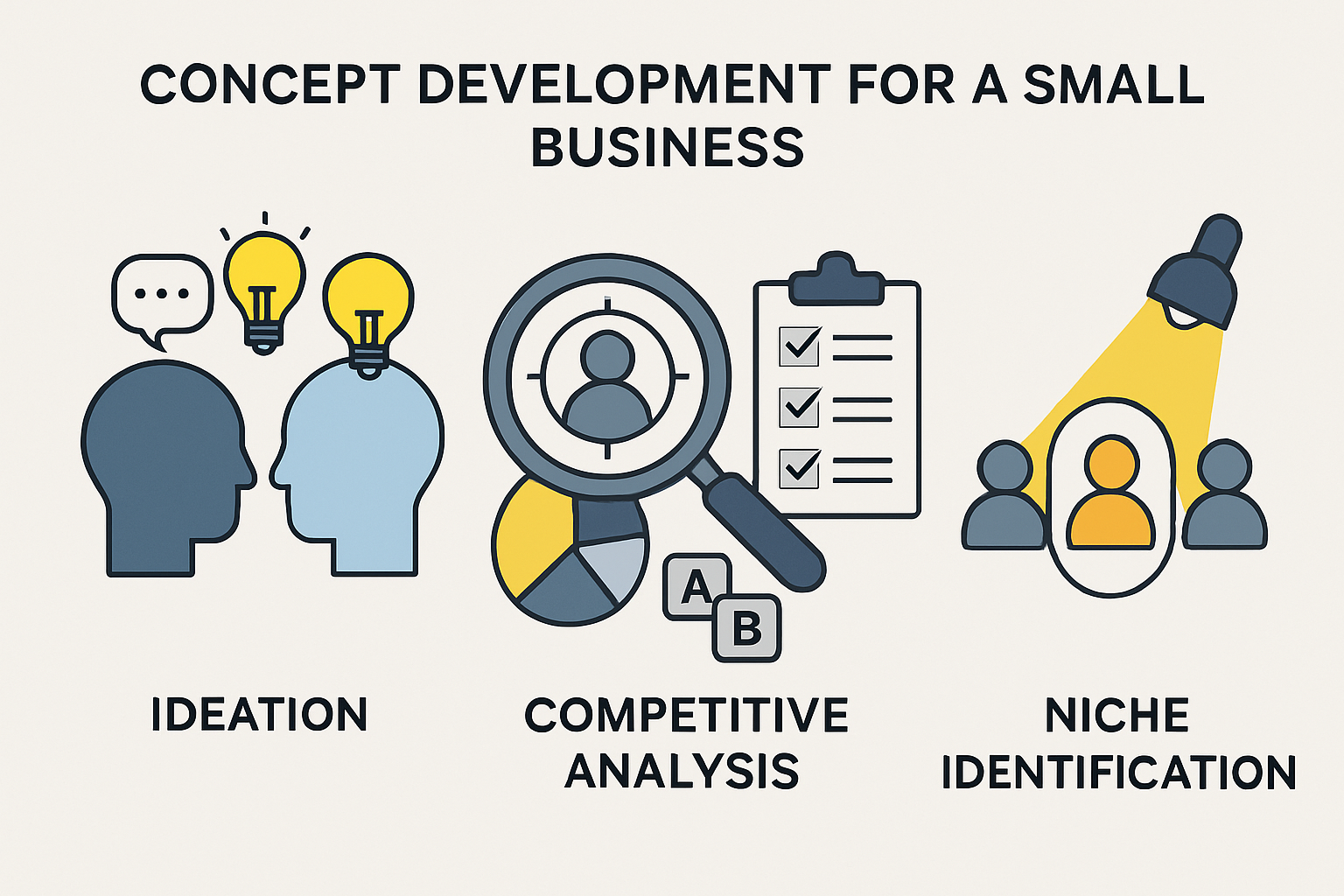
Every successful business begins with an idea, but not all ideas are created equal. The initial phase of “Creating a Small Business: From Concept to First Sale” involves refining that nascent idea into a concrete, viable business concept. This requires more than just passion; it demands critical thinking, rigorous research, and a willingness to adapt.
Ideation and Niche Identification
The very first step is often brainstorming. Think about problems you or others face, skills you possess, or passions you have that could translate into a product or service. Consider current trends and future predictions for 2025. For example, the increasing demand for sustainable products or remote services might spark an idea.
Once you have a handful of ideas, the next crucial step is niche identification. A niche market is a smaller, more specialized segment of a larger market that you can serve effectively. Trying to appeal to everyone often means appealing to no one.
“Focusing on a specific niche allows you to become an expert and cater directly to the unique needs and desires of a defined customer group.”
For instance, instead of “selling clothes,” consider “eco-friendly baby clothes made from organic cotton for parents in urban areas.” This specificity helps in all subsequent stages, from product development to marketing.
Market Research: Understanding Your Landscape
After identifying a potential niche, thorough market research becomes paramount. This involves systematically gathering and analyzing information about your target customers, competitors, and the overall industry.
Identifying Your Target Audience
Who exactly are you trying to serve? Understanding your target audience is fundamental. This goes beyond demographics (age, gender, income) to psychographics (values, interests, lifestyle, buying habits).
- Demographic Data: Age range, gender, income level, education, occupation, location.
- Psychographic Data: Hobbies, interests, values, pain points, aspirations, media consumption habits.
You can gather this information through surveys, interviews, focus groups, and analyzing existing data from public sources or industry reports. Tools like Google Trends or social media analytics can provide valuable insights into what people are searching for and discussing online.
Competitive Analysis
Even if your idea feels unique, it’s highly probable you’ll have direct or indirect competitors. A competitive analysis helps you understand who they are, what they offer, their strengths and weaknesses, and how you can differentiate your business.
Table 1: Competitive Analysis Framework
| Aspect | Competitor A (e.g., Large Chain) | Competitor B (e.g., Local Shop) | Your Business (Differentiation) |
|---|---|---|---|
| Products/Services | Wide range, generic | Niche, handmade | High-quality, personalized |
| Pricing | Low, mass market | Medium-high, artisanal | Premium value, custom options |
| Marketing | Digital ads, broad appeal | Word-of-mouth, local events | Content marketing, community focus |
| Customer Service | Standard, automated | Personal, community-oriented | Exceptional, proactive support |
| Strengths | Scale, price | Local trust, unique products | Innovation, customer experience |
| Weaknesses | Impersonal, slow to adapt | Limited reach, higher costs | New, unknown (initial) |
By understanding your competitors, you can identify gaps in the market, discover opportunities for innovation, and articulate your unique selling proposition (USP) – what makes your business stand out.
Validating Your Concept
Before investing significant time and money, it’s crucial to validate your business concept. This means testing your assumptions with potential customers to confirm there’s actual demand.
- Surveys and Interviews: Directly ask your target audience if they would use or buy your product/service, what they would pay, and what features they value most.
- Minimum Viable Product (MVP): Create a basic version of your product or service with just enough features to satisfy early customers and provide feedback for future development. This could be a simple website, a prototype, or a limited service offering.
- Landing Page Test: Set up a landing page describing your offering and measure interest through sign-ups, pre-orders, or clicks on a “learn more” button. This helps gauge demand without building the full product.
Validation reduces risk and ensures you’re building something people genuinely want. Learn more about becoming a successful entrepreneur and validating your ideas by exploring resources like 10 Ways to Become a Successful Entrepreneur.
Crafting Your Blueprint: The Business Plan
With a validated concept, the next critical phase in “Creating a Small Business: From Concept to First Sale” is developing a comprehensive business plan. This document is far more than just a formality; it’s a strategic roadmap that guides every aspect of your venture. It helps you clarify your vision, set realistic goals, and articulate how you plan to achieve them.
What is a Business Plan and Why Do You Need One?
A business plan is a formal document that outlines a company’s goals and how it plans to achieve them. It details your company’s mission, products or services, target market, financial forecasts, and operational strategies.
Why is it essential, especially in 2025?
- Clarity and Direction: It forces you to think through every aspect of your business, identifying potential challenges and opportunities.
- Funding: Lenders and investors will almost always require a well-researched business plan before considering providing capital.
- Attracting Talent: A clear vision and strategy can help you recruit key employees.
- Measuring Progress: It provides benchmarks against which you can measure your actual performance.
- Risk Mitigation: By anticipating potential issues, you can develop strategies to overcome them.
Key Components of a Business Plan
While business plans can vary in length and detail, most include the following core sections:
- Executive Summary: This is a concise overview of your entire business plan. It should be compelling and highlight your business concept, mission, products/services, target market, competitive advantage, financial projections, and funding request (if applicable). Although it comes first, it’s often written last.
- Company Description:
- Mission Statement: A brief statement explaining your company’s purpose and values.
- Vision Statement: Describes what your company aspires to achieve in the long term.
- Legal Structure: Sole proprietorship, partnership, LLC, corporation (more on this later).
- Location: Where your business will operate from.
- Industry Overview: A brief look at the industry you’re entering.
- Products and Services: Detail what you are selling.
- Description: Explain your products or services in detail, highlighting their features and benefits.
- Unique Selling Proposition (USP): What makes your offering different or better than the competition?
- Life Cycle: How do you anticipate your products/services evolving over time?
- Intellectual Property: Any patents, trademarks, or copyrights.
- Market Analysis: This section expands on your market research.
- Target Market: Detailed profile of your ideal customer.
- Market Size and Trends: Current and projected growth of your market.
- SWOT Analysis: Strengths, Weaknesses, Opportunities, and Threats related to your business and market.
- Competitive Landscape: In-depth analysis of your key competitors.
- Marketing and Sales Strategy: How will you reach your customers and convince them to buy?
- Branding: Your company’s identity, logo, messaging.
- Pricing Strategy: How you will price your products/services to be competitive and profitable.
- Promotion Strategy: Advertising, public relations, social media, content marketing, sales promotions.
- Sales Process: How customers will purchase from you.
- Management Team: Who is running the show?
- Organizational Structure: Key roles and responsibilities.
- Team Members: Bios highlighting relevant experience, skills, and expertise.
- Advisory Board: If applicable, key advisors.
- Operational Plan: How your business will function day-to-day.
- Facilities: Office, retail space, warehouse, online platform.
- Equipment: Tools, technology, machinery.
- Production Process: How products are made or services are delivered.
- Supply Chain Management: Suppliers, inventory, logistics.
- Technology: Software, systems, digital infrastructure.
- Financial Plan: This is often the most scrutinized section, especially for investors.
- Startup Costs: A detailed list of all expenses incurred before opening.
- Revenue Projections: Sales forecasts for the next 3-5 years.
- Cash Flow Projections: Estimates of money coming in and going out.
- Break-Even Analysis: When your revenue will cover your costs.
- Balance Sheet: Summary of assets, liabilities, and owner’s equity.
- Funding Request (if applicable): How much money you need, how it will be used, and how it will be repaid.
Crafting a Winning Business Plan
- Be Realistic: Avoid overly optimistic projections. Ground your assumptions in research and data.
- Keep it Concise: While comprehensive, a good business plan is easy to read and digest. Focus on clarity and essential information.
- Know Your Audience: Tailor your plan slightly depending on who you’re presenting it to (e.g., a bank vs. an angel investor).
- Review and Revise: Your business plan is a living document. It should be reviewed and updated regularly as your business evolves.
For more inspiration and lessons from successful entrepreneurs, consider exploring “17 Key Lessons for Entrepreneurs Starting a Business” at 17 Key Lessons for Entrepreneurs Starting a Business.
Setting Up for Success: Legal, Financial, and Operational Foundations
With a solid business plan in hand, the next phase of “Creating a Small Business: From Concept to First Sale” moves into the practicalities of formalizing your venture. This involves navigating legal requirements, securing finances, and establishing the operational framework that will allow your business to run smoothly.
Choosing Your Business Legal Structure
One of the first critical decisions is determining the legal structure of your business. This choice impacts your personal liability, taxes, administrative burden, and ability to raise capital.
Table 2: Common Business Legal Structures
| Structure | Description | Personal Liability | Tax Implications | Complexity (Setup/Admin) |
|---|---|---|---|---|
| Sole Proprietorship | Owned and run by one individual, no legal distinction | Unlimited (personal assets at risk) | Pass-through (profits/losses on personal tax return) | Low |
| Partnership | Owned by two or more individuals | Unlimited (for general partners) | Pass-through | Medium |
| Limited Liability Company (LLC) | Hybrid, offering liability protection of corporation | Limited (personal assets protected) | Pass-through (can elect to be taxed as corporation) | Medium |
| Corporation (C-Corp) | Separate legal entity from owners | Limited | Double taxation (corporate and shareholder level) | High |
| S Corporation (S-Corp) | Similar to C-Corp but elects pass-through taxation | Limited | Pass-through (avoids double taxation) | High |
Consulting with a legal or tax professional is highly recommended to choose the structure best suited for your specific business goals and risk tolerance.
Registering Your Business and Obtaining Licenses
Once you’ve chosen a legal structure, you’ll need to formally register your business.
- Business Name Registration: Check for availability and register your business name with the appropriate state or local government agency. You may also need to register a “Doing Business As” (DBA) name if you operate under a name different from your legal business name.
- Federal Tax ID (EIN): Most businesses, especially those with employees or operating as a corporation or partnership, will need an Employer Identification Number (EIN) from the IRS. This is like a social security number for your business.
- State and Local Licenses/Permits: Depending on your industry and location, you may need various permits and licenses. This could include a general business license, professional licenses, health permits, zoning permits, and sales tax permits. Research requirements early to avoid delays.
- Intellectual Property: Consider registering trademarks for your business name or logo, and copyrights for original works if applicable.
Securing Funding and Managing Finances
Unless you’re entirely self-funded, securing capital is a vital step.
- Self-Funding (Bootstrapping): Using personal savings, credit cards, or generating early revenue to fund operations. This offers maximum control but also maximum personal risk.
- Friends and Family: Often a first source for early-stage capital, but it’s crucial to treat these as formal investments with clear terms.
- Small Business Loans: Banks and credit unions offer various loan products. A strong business plan and good personal credit are essential.
- SBA Loans: The U.S. Small Business Administration (SBA) guarantees loans made by approved lenders, making it easier for small businesses to qualify.
- Angel Investors/Venture Capital: For high-growth potential businesses, these investors provide capital in exchange for equity.
- Crowdfunding: Platforms allow you to raise small amounts of money from a large number of people, often in exchange for products, equity, or donations.
Financial Management Basics:
- Separate Business and Personal Finances: Open dedicated business bank accounts and credit cards from day one. This simplifies accounting and protects personal assets.
- Accounting System: Implement an accounting system (e.g., QuickBooks, Xero) to track income, expenses, and generate financial reports.
- Budgeting: Create and stick to a realistic budget to control spending.
- Monitor Cash Flow: Understand the flow of money in and out of your business to ensure you have enough liquidity.
Building Your Team and Establishing Operations
Even as a solo entrepreneur, you’ll likely need to delegate or outsource some tasks.
- Hiring (or Outsourcing): Define key roles you need to fill, whether it’s an employee, a freelancer, or a contractor. Clearly define responsibilities and expectations.
- Setting Up Your Workspace: This could be a home office, a co-working space, a retail storefront, or a dedicated office. Ensure it meets your operational needs.
- Technology and Tools: Invest in essential software and tools for communication, project management, customer relationship management (CRM), sales, and marketing.
- Supplier Relationships: Identify and build relationships with reliable suppliers for your products or services.
- Insurance: Protect your business with appropriate insurance policies (e.g., general liability, professional liability, property insurance).
“An entrepreneur’s journey is often about continuous learning and adaptation. Setting up strong foundations early on paves the way for sustainable growth.”
For more entrepreneurial insights, consider browsing Start Entrepreneur Online for a wealth of resources and articles.
Building Your Brand and Marketing for the First Sale
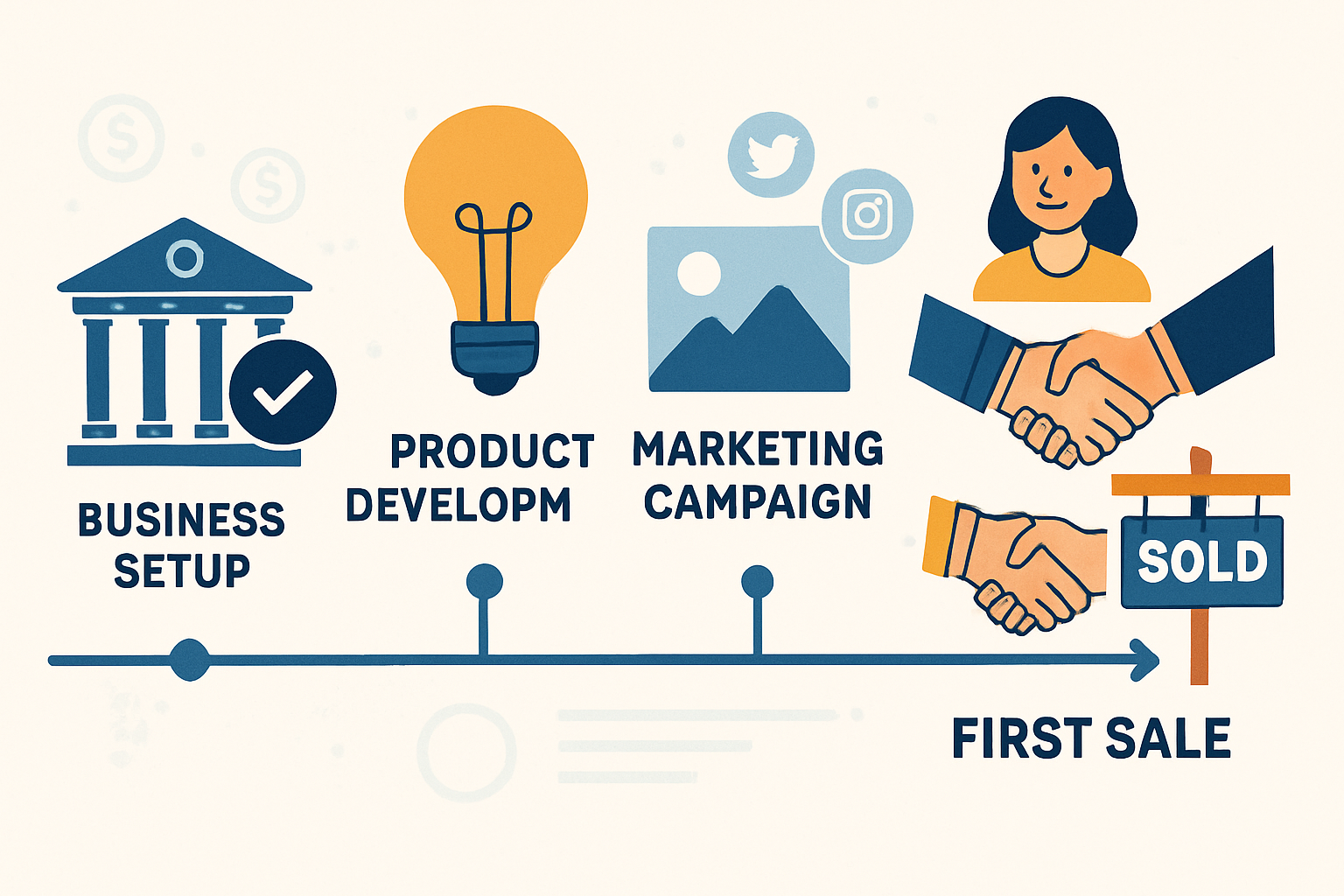
With the legal and operational foundations laid, the focus shifts to attracting customers. “Creating a Small Business: From Concept to First Sale” crucially depends on effective branding and a robust marketing strategy designed to capture attention and drive initial purchases. In 2025, a strong online presence is non-negotiable.
Developing Your Brand Identity
Your brand is more than just a logo; it’s the overall perception people have of your company. It encompasses your values, personality, and the promise you make to your customers.
- Brand Name: Choose a memorable, relevant, and unique name. Check for availability (domain name, social media handles, trademark).
- Logo and Visuals: Invest in a professional logo that reflects your brand’s essence. Develop a consistent visual identity (color palette, typography, imagery) that will be used across all platforms.
- Brand Voice and Messaging: Define how your brand communicates. Is it professional, playful, authoritative, or empathetic? Craft clear, consistent messages that resonate with your target audience.
- Brand Story: What’s the narrative behind your business? Why did you start it? A compelling story can create an emotional connection with your audience.
Crafting a Strategic Marketing Plan
Your marketing plan outlines how you will reach your target audience and persuade them to become customers. It should be directly informed by your market research and brand identity.
Digital Marketing Essentials
In 2025, digital marketing is often the most cost-effective and far-reaching way for small businesses to connect with customers.
- Website Development: Your website is your online storefront and information hub. It must be professional, user-friendly, mobile-responsive, and clearly communicate your value proposition. Ensure it’s optimized for search engines (SEO) to improve visibility.
- Search Engine Optimization (SEO): Optimizing your website and content to rank higher in search engine results (like Google). This includes using relevant keywords, creating high-quality content, and building backlinks.
- Social Media Marketing: Identify which platforms your target audience uses most (e.g., Instagram, TikTok, LinkedIn, Facebook). Develop a content strategy that engages your audience, builds community, and drives traffic to your website.
- Content Marketing: Create valuable and relevant content (blog posts, videos, infographics, guides) that attracts and educates your target audience, establishing your expertise and building trust.
- Email Marketing: Build an email list and use it to share updates, promotions, and valuable content. It’s a highly effective way to nurture leads and build customer loyalty.
- Paid Advertising (PPC): Platforms like Google Ads and social media ads (e.g., Facebook Ads) allow you to target specific demographics with precision, driving immediate traffic and leads. Start with a small budget and scale as you see results.
Offline Marketing and Public Relations
While digital dominates, traditional marketing still holds value, especially for local businesses.
- Networking: Attend industry events, local business meetups, and community gatherings to build relationships and spread the word.
- Local Partnerships: Collaborate with complementary local businesses for cross-promotion or joint events.
- Public Relations (PR): Seek media coverage in local newspapers, industry publications, or online blogs. A compelling story can generate valuable exposure.
- Word-of-Mouth: Encourage satisfied customers to spread the word through testimonials, reviews, and referrals. This is often the most powerful form of marketing.
Pricing Strategy
Determining the right price for your products or services is crucial for profitability and market perception.
- Cost-Plus Pricing: Calculate your total costs (materials, labor, overhead) and add a desired profit margin.
- Value-Based Pricing: Price based on the perceived value your product/service delivers to the customer, rather than just your costs.
- Competitor-Based Pricing: Set prices in relation to what your competitors are charging, either matching, undercutting, or positioning yourself as a premium option.
- Freemium Model: Offer a basic version of your product for free and charge for premium features (common for software/apps).
Consider your target audience’s willingness to pay, your brand positioning, and your business goals when setting prices. You may find insights into effective entrepreneurial strategies at 101 Reasons Being an Entrepreneur Rocks.
The First Sale and Beyond: Growth and Adaptation
Reaching your first sale is a monumental achievement in “Creating a Small Business: From Concept to First Sale,” signaling that your idea has found an audience willing to invest. However, this is merely the beginning. The journey of entrepreneurship demands continuous learning, adaptation, and a strategic approach to growth.
Making That First Sale
The first sale validates your efforts and proves your concept’s market viability. It’s not just a transaction; it’s a critical moment for gathering feedback and refining your approach.
- Pilot Programs/Early Adopters: Consider offering your product or service to a small group of early adopters at a discounted rate in exchange for thorough feedback and testimonials.
- Direct Outreach: For B2B businesses, personalized outreach, cold calls, or networking can be effective. For B2C, online launch campaigns, local events, or pop-up shops can generate initial interest.
- Exceptional Customer Experience: From the very first interaction, strive to provide an outstanding customer experience. This can turn a first-time buyer into a loyal advocate and generate valuable word-of-mouth referrals.
- Streamlined Purchase Process: Ensure your website’s checkout, payment gateway, or in-person sales process is smooth, secure, and easy to navigate. Any friction can deter a sale.
Nurturing Customer Relationships
Once you’ve made a sale, the goal shifts from acquisition to retention and loyalty. Repeat customers are often more profitable and less expensive to serve than new ones.
- Follow-Up: Send a thank-you note or email after the purchase. Ask for feedback on their experience.
- Customer Support: Be readily available to answer questions, resolve issues, and provide assistance. Excellent support builds trust.
- Loyalty Programs: Reward repeat customers with discounts, exclusive access, or special perks.
- Personalization: Use customer data (ethically and with consent) to offer personalized recommendations or tailored communications.
- Community Building: Create platforms (e.g., social media groups, forums) where customers can connect with your brand and each other.
Measuring Success and Iterating
To ensure sustained growth, you must continuously monitor your business performance and be prepared to adapt.
- Key Performance Indicators (KPIs): Identify crucial metrics to track. Examples include:
- Sales Revenue: Total income from sales.
- Customer Acquisition Cost (CAC): How much it costs to acquire a new customer.
- Customer Lifetime Value (CLTV): The total revenue a customer is expected to generate over their relationship with your business.
- Conversion Rate: The percentage of visitors or leads who complete a desired action (e.g., make a purchase).
- Website Traffic: Number of visitors to your site.
- Social Media Engagement: Likes, shares, comments, etc.
- Collect and Act on Feedback: Actively seek feedback from customers, employees, and mentors. Use this information to improve your products, services, and operations.
- Analyze and Adjust: Regularly review your KPIs and adapt your strategies based on what the data tells you. Is a marketing channel underperforming? Are customers requesting a new feature? Be agile.
- Stay Current: The business landscape is constantly evolving. Keep an eye on industry trends, technological advancements (like those discussed at 17 Blockchain Applications That Are Transforming Society), and shifts in customer behavior, especially in 2025.
Strategies for Growth
Once your business is stable, look for opportunities to scale.
- Expand Product/Service Offerings: Introduce new products or services that complement your existing ones and appeal to your current customer base.
- Enter New Markets: Explore new geographic areas or customer segments.
- Strategic Partnerships: Collaborate with other businesses to reach new audiences or offer bundled solutions.
- Franchising or Licensing: If your business model is replicable, consider these options for rapid expansion.
- Invest in Technology: Leverage automation, AI, and other tools to improve efficiency and customer experience.
“The entrepreneurial journey is not a straight line, but a dynamic process of learning, growing, and adapting. Every challenge is an opportunity in disguise.”
Remember that consistency and perseverance are key. Celebrate small victories, learn from setbacks, and always keep your long-term vision in sight. For further insights into the mindset required for growth, you might find inspiration from articles discussing the entrepreneurial spirit, such as 101 Reasons Being an Entrepreneur Rocks.
Conclusion
Creating a small business, from the initial spark of an idea to the excitement of the first sale, is a deeply rewarding yet challenging endeavor. This comprehensive guide has walked through the essential stages: refining your concept, meticulously planning, establishing legal and operational frameworks, building a compelling brand, and strategizing for market entry. Each step, though distinct, is interconnected, forming a cohesive path to launching a sustainable venture.
In 2025, the digital landscape offers unparalleled opportunities for small businesses to reach global audiences, but it also demands a strategic approach to online presence and customer engagement. The emphasis on validation, robust planning, and continuous adaptation cannot be overstated. Your business plan is not a static document but a living guide that evolves with your company and the market.
Actionable Next Steps:
- Revisit Your Idea: Challenge your initial concept with rigorous market research. Can you identify an even more specific niche?
- Start Your Business Plan: Even if it’s just an outline, begin drafting each section. This process will clarify your thoughts and expose gaps in your strategy.
- Consult Experts: Seek advice from legal, financial, and marketing professionals. Their expertise can save you significant time and costly mistakes.
- Network Actively: Connect with other entrepreneurs, mentors, and potential customers. Their insights and support are invaluable.
- Build Your Online Foundation: Begin conceptualizing your website and social media presence, laying the groundwork for your digital marketing efforts.
The journey of entrepreneurship is one of persistence, passion, and continuous learning. By methodically addressing each stage of “Creating a Small Business: From Concept to First Sale,” you significantly increase your chances of building a resilient and prosperous enterprise. Embrace the process, stay agile, and celebrate every milestone on your path to entrepreneurial success.
References
[1] U.S. Small Business Administration. (2025). Starting & Managing a Business. Retrieved from https://www.sba.gov/business-guide/start-business (Note: The specific URL may vary as the SBA updates its site content.)
[2] Harvard Business Review. (2025). The Lean Startup. (While not a direct citation to a 2025 article, the methodology of MVP and validation remains central and perpetually relevant in business literature).
Discover more from Start Entrepreneur Online
Subscribe to get the latest posts sent to your email.