
Have you ever dreamt of becoming your own boss, setting your own hours, and building something truly yours, but felt held back by the intimidating hurdle of startup costs?
The good news is, in 2026, the entrepreneurial landscape is more accessible than ever, and launching a successful venture doesn’t always require a hefty investment.
This comprehensive guide will unveil the Top 20 Businesses You Can Start with No Money, empowering aspiring entrepreneurs to transform their skills and passions into profitable enterprises without breaking the bank.
Key Takeaways
- Zero-Cost Entry: Many lucrative business opportunities in 2025 require minimal to no upfront financial investment, relying instead on existing skills, time, and readily available resources.
- Leverage Digital Platforms: The internet is a powerful tool for launching and scaling businesses, offering free or low-cost ways to market services, reach customers, and conduct operations.
- Focus on Skills and Services: Businesses built around personal skills, expertise, and service provision are often the easiest to start without capital.
- Build a Strong Network: Networking and fostering relationships are crucial for finding clients, gaining referrals, and securing early opportunities.
- Actionable Steps for 2025: Success in these no-money ventures hinges on identifying a market need, providing value, and consistently delivering high-quality service.
Discovering the Top 20 Businesses You Can Start with No Money in 2025
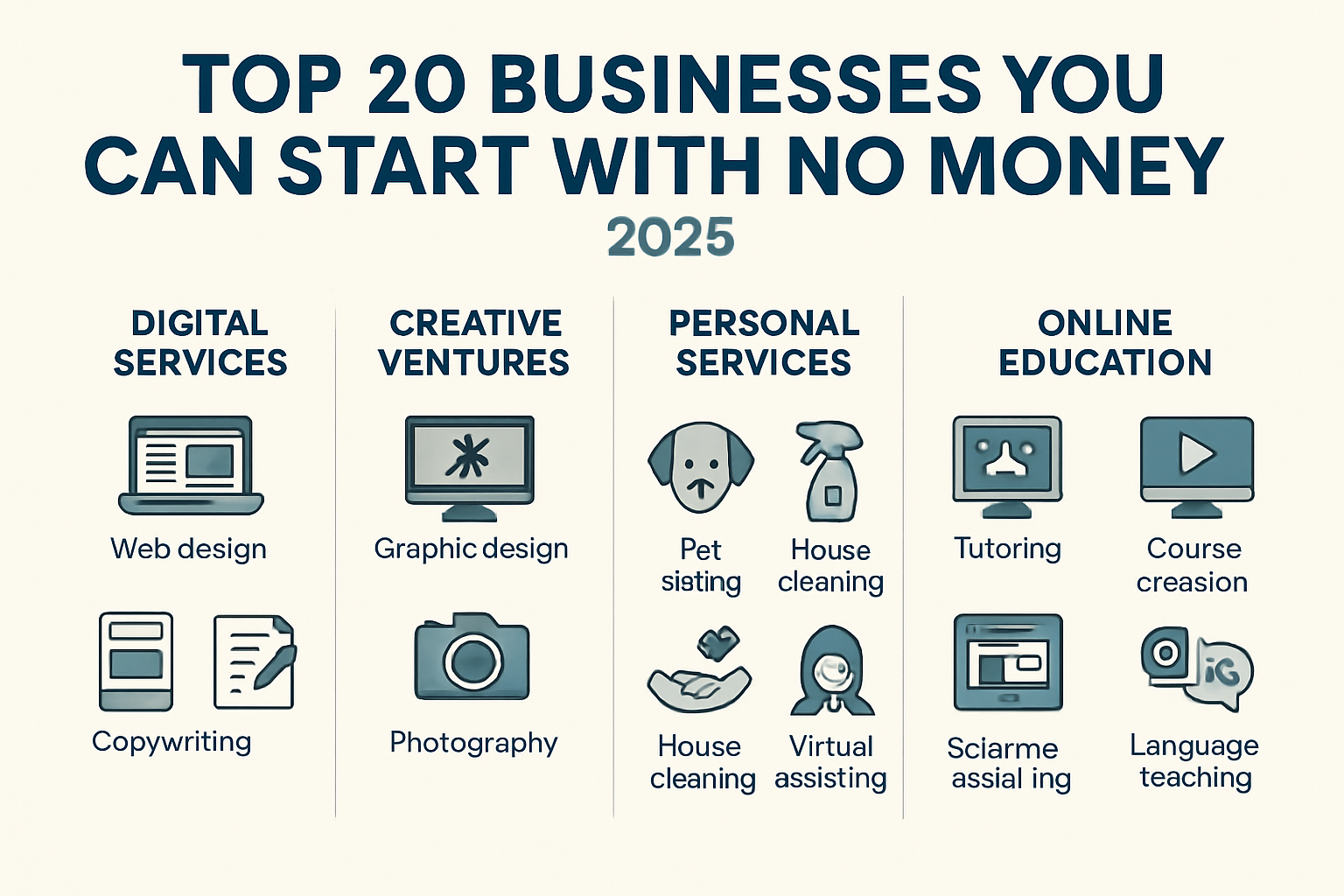
The notion that starting a business requires a substantial financial outlay is a common misconception. In today’s digital age, and particularly looking ahead into 2025, countless opportunities exist for resourceful individuals to launch ventures with little to no capital. The key lies in leveraging existing skills, free online tools, and a strong work ethic. This section will delve into diverse categories of businesses that fit this model, offering practical insights into how each can be initiated.
1. Freelance Writing and Content Creation
If you have a knack for words, freelance writing is an excellent entry point into entrepreneurship. Businesses constantly need well-written articles, blog posts, website content, marketing materials, and social media copy. With just a computer and internet access, you can begin offering your services.
- How to Start: Build a portfolio of writing samples (even if they are speculative pieces), create a professional online profile on platforms like LinkedIn, and start pitching to potential clients. Networking with other freelancers and businesses can also lead to opportunities.
- Income Potential: Varies widely based on experience, niche, and client rates. Many freelancers earn a full-time income once established.
- Tools: Google Docs, Grammarly (free version), a personal website/portfolio (can be created with free website builders).
2. Social Media Management
Businesses, especially small and local ones, often struggle to maintain an effective presence on social media. If you understand various platforms (Facebook, Instagram, TikTok, LinkedIn) and can create engaging content, you can offer social media management services.
- How to Start: Showcase your own strong social media presence. Offer to manage social media for a friend’s business or a non-profit for free initially to build a portfolio.
- Income Potential: Can range from a few hundred dollars per client per month for basic management to several thousand for comprehensive strategy and content creation.
- Tools: Canva (free version) for graphic design, Hootsuite or Buffer (free tiers) for scheduling, social media platform native tools.
3. Virtual Assistant (VA) Services
Virtual assistants provide administrative, technical, or creative assistance to clients remotely. This could include tasks like email management, scheduling, data entry, research, customer service, and more. The demand for VAs continues to grow as businesses seek flexible support.
- How to Start: Identify your core skills and services you can offer. Create a simple online presence, and market your services to small business owners, busy professionals, and entrepreneurs.
- Income Potential: Hourly rates vary based on specialized skills; many VAs charge between $20-$50 per hour.
- Tools: Google Workspace, Zoom, project management tools (Trello, Asana – free versions).
4. Graphic Design (Self-Taught/Portfolio Based)
Even without formal training, individuals with a good eye for design can become graphic designers. Tools like Canva have democratized design, allowing users to create professional-looking logos, social media graphics, flyers, and presentations.
- How to Start: Practice extensively with free tools. Create a strong portfolio demonstrating your style and capabilities. Offer pro bono work for local businesses or non-profits to gain experience and testimonials.
- Income Potential: Project-based or hourly, depending on complexity. Small design jobs can fetch $50-$200, while larger branding projects can be thousands.
- Tools: Canva (free version), GIMP (free image editor), Inkscape (free vector graphics editor).
5. Web Design/Development (Entry-Level)
While advanced web development can be complex, many small businesses simply need a basic, functional website. Learning platforms like WordPress (which has free themes and plugins) or drag-and-drop site builders (Wix, Squarespace – free trials/basic plans) allows you to offer entry-level web design services.
- How to Start: Learn the basics of a platform like WordPress or a site builder. Build a few personal or mock websites to showcase your skills. Network with local small businesses.
- Income Potential: Simple websites can range from $500 to $2,000 depending on features and client needs.
- Tools: WordPress.org (free software, hosting required but clients usually pay), free website builders with limited features, code editors (VS Code – free).
6. Online Tutoring or Coaching
If you have expertise in a particular academic subject, skill, or area of life (e.g., fitness, career development), online tutoring or coaching can be a highly rewarding business. The demand for personalized learning and guidance is consistently high.
- How to Start: Define your niche. Create a simple profile on social media or a free website. Leverage video conferencing for sessions.
- Income Potential: Hourly rates vary widely, from $20-$100+ depending on expertise and demand.
- Tools: Zoom, Google Meet, Calendly (free tier) for scheduling.
7. Pet Sitting/Dog Walking
For animal lovers, this is a perfect no-money startup. Many pet owners need reliable care for their beloved companions while they are away or at work.
- How to Start: Start with friends, family, and neighbors. Spread the word locally through flyers or community groups. Ensure you have proper animal handling skills and are trustworthy.
- Income Potential: Hourly or per-visit rates. A small client base can generate a steady income.
- Tools: Basic leash and collar, pet waste bags, a reliable phone for communication.
8. House Cleaning Services
A simple yet highly in-demand service, house cleaning requires minimal startup costs – primarily cleaning supplies you might already own. Both residential and commercial clients are always looking for reliable cleaners.
- How to Start: Begin with referrals from friends and family. Offer competitive rates initially to build a client base and testimonials. Focus on consistency and quality.
- Income Potential: Hourly rates or flat fees per job. Can be scaled by taking on more clients or eventually hiring help.
- Tools: Common cleaning supplies (many clients provide their own), a reliable vehicle (optional but helpful).
9. Personal Organizing
For those with an aptitude for order and decluttering, personal organizing is a growing niche. Many individuals and small businesses struggle with organization and are willing to pay for expert help.
- How to Start: Showcase your own organized spaces or help friends/family. Create a simple portfolio of before-and-after photos. Market yourself through local community groups.
- Income Potential: Hourly rates, often starting around $30-$60 per hour, depending on location and experience.
- Tools: Your organizational skills, basic measuring tape, labels, and bins (clients often purchase these themselves).
10. Errand Service/Personal Shopper
Busy professionals, seniors, or individuals with limited mobility often need help with errands like grocery shopping, dry cleaning pickup, or prescription collection. A reliable errand service can fill this gap.
- How to Start: Advertise locally. Build trust through punctuality and reliability. Background checks might be beneficial for clients.
- Income Potential: Hourly or per-errand fees. Can grow significantly with a good reputation.
- Tools: A reliable vehicle (or public transport knowledge), phone for communication, cash for transactions (reimbursed by client).
11. Dropshipping
Dropshipping involves selling products online without holding any inventory yourself. When a customer places an order, you purchase the item from a third-party supplier, who then ships it directly to the customer. This significantly reduces upfront costs.
- How to Start: Research popular niches and find reliable suppliers (e.g., via AliExpress, SaleHoo). Set up a basic e-commerce store using platforms like Shopify (free trial) or even social media marketplace features.
- Income Potential: Profit margins can be thin, but volume can lead to substantial income. Success depends on marketing and product selection.
- Tools: E-commerce platform (free trials available), internet access, basic marketing skills. To learn more about entrepreneurship, check out Start Entrepreneur Online.
12. Affiliate Marketing
Affiliate marketing is promoting other companies’ products or services. When someone makes a purchase through your unique affiliate link, you earn a commission. This can be done through blogs, social media, or YouTube channels.
- How to Start: Choose a niche you’re passionate about. Create content (reviews, comparisons, tutorials) that genuinely helps people. Sign up for affiliate programs (e.g., Amazon Associates, ShareASale).
- Income Potential: Highly scalable, but earnings depend on traffic, conversions, and commission rates. Can be very lucrative.
- Tools: Blog (free platforms like WordPress.com or Blogger), social media accounts, YouTube channel.
13. Handyman/Odd Job Services
If you’re skilled at minor repairs, assembly, or general maintenance tasks around the house, a handyman service can be incredibly profitable. Many people lack the time, tools, or expertise for these jobs.
- How to Start: Start with basic tools you already own. Market your services to neighbors, friends, and family. Build a reputation for reliability and quality work.
- Income Potential: Hourly rates or per-job fees. Can be scaled by building a clientele and specializing in certain areas.
- Tools: Basic tool kit (hammer, screwdriver, wrench, drill – items you might already have).
14. Language Translation
If you are fluent in more than one language, offering translation services can be a valuable business. There’s a constant need for document translation, website localization, and interpretive services for individuals and businesses.
- How to Start: Create a professional profile highlighting your language pairs and expertise. Offer a few pro bono translations to build a portfolio. Network with international businesses or legal firms.
- Income Potential: Rates are often per word or per hour, depending on the complexity and urgency of the translation.
- Tools: Computer, internet, translation memory software (some free versions available), dictionaries.
15. Online Reselling (Thrift Flips/Arbitrage)
This involves buying items at a low price (from thrift stores, garage sales, clearance racks) and reselling them online for a profit. It requires an eye for value and understanding what sells.
- How to Start: Begin with items you already own and no longer need. Research popular categories and brands. Use free platforms like eBay, Poshmark, or Facebook Marketplace.
- Income Potential: Directly tied to your ability to source desirable items cheaply and market them effectively.
- Tools: Smartphone for photos and listing, shipping supplies (can be acquired cheaply or reused).
16. Local Tour Guide
If you live in a city or area with tourist appeal and have extensive local knowledge, you can offer personalized walking tours or specialty tours (e.g., food tours, historical tours, street art tours).
- How to Start: Develop a compelling tour itinerary. Practice your storytelling. Market to local hotels, Airbnb hosts, and through social media.
- Income Potential: Per person fees or flat group rates. Can be scaled by offering multiple tours or hiring other guides.
- Tools: Your knowledge, good walking shoes, an engaging personality.
17. Resume Writing/Career Coaching
Many individuals struggle to craft compelling resumes, cover letters, or prepare for job interviews. If you have experience in HR, recruitment, or a strong understanding of career development, you can help others land their dream jobs.
- How to Start: Create strong samples of resumes and cover letters. Offer services to friends or recent graduates to build testimonials. Market through LinkedIn and local job boards.
- Income Potential: Can charge per resume, per hour, or package deals for multiple services.
- Tools: Computer, internet, strong writing skills, knowledge of current hiring trends.
18. Stock Photography/Videography
If you have a good camera (even a high-quality smartphone camera can work for some niches) and an eye for composition, you can sell your photos and videos to stock agencies. Companies and content creators constantly need visual assets.
- How to Start: Develop your photography or videography skills. Research popular stock image categories. Submit your best work to platforms like Shutterstock, Adobe Stock, or Getty Images.
- Income Potential: Passive income; earnings per download are small, but volume can add up over time.
- Tools: Camera (smartphone or DSLR), editing software (many free options available), internet access.
19. Podcast Editing/Production
Podcasting continues to grow in popularity, but many hosts lack the time or technical skills to edit and produce their shows professionally. If you have audio editing skills, this is a valuable service.
- How to Start: Learn basic audio editing software (Audacity is free). Offer to edit a friend’s podcast or create a demo reel. Network with podcasters and content creators.
- Income Potential: Per-episode rates or monthly retainers, depending on the length and complexity of the editing.
- Tools: Audacity (free), computer, quality headphones, internet. Explore podcasts for entrepreneurs to understand the market.
20. Online Course Creation (Using Free Platforms)
Do you have specialized knowledge or a skill that others want to learn? You can create and sell online courses. Platforms like Teachable or Thinkific offer free plans or trial periods to get started.
- How to Start: Identify a niche where you have expertise and there’s a demand for learning. Outline your course content. Record videos (even with a smartphone) and create accompanying materials.
- Income Potential: Highly scalable; one course can generate passive income over time.
- Tools: Smartphone or webcam for recording, basic editing software, presentation software (Google Slides/PowerPoint), free course platform tiers. For more ideas on how to start and grow, see successful startup entrepreneurs.
“The biggest risk is not taking any risk… In a world that is changing really quickly, the only strategy that is guaranteed to fail is not taking risks.” – Mark Zuckerberg [1]
Strategies for Launching Your No-Money Business in 2025
Starting a business with no money isn’t just about picking from the Top 20 Businesses You Can Start with No Money; it’s also about a strategic approach to launching and growing your venture. In 2025, with the right mindset and execution, you can build a solid foundation for success. This section outlines crucial steps and considerations for effectively getting your zero-cost business off the ground.
1. Identify Your Core Skills and Passion
The first step in any no-money venture is self-assessment. What are you good at? What do you enjoy doing? Your existing skills, hobbies, and passions are your most valuable assets. These could be anything from writing and design to organizing, teaching, or caring for pets. Matching your business idea with something you genuinely enjoy will fuel your motivation and improve your chances of long-term success. Consider skills you’ve developed in previous jobs, volunteer work, or even personal projects.
2. Validate Your Idea and Market Demand
Just because you have a skill doesn’t mean there’s a paying market for it. Before investing significant time, conduct simple market research.
- Listen to Conversations: What problems are people discussing online or in your community?
- Check Competitors: Are others offering similar services? This often indicates demand, and you can learn from their approach.
- Talk to Potential Clients: Directly ask people if they would pay for your service. Use free surveys or informal interviews.
- Test the Waters: Offer a small service package at a discounted rate or even for free to a few initial clients to gather feedback and testimonials.
3. Build a Minimal Viable Product (MVP) or Service
Instead of waiting to perfect everything, launch with the bare minimum required to deliver value. For service-based businesses, this might mean offering a basic version of your service. For product-based ideas like dropshipping, it means launching a simple online store with a few key products. The goal is to get feedback quickly and iterate. This lean approach helps you conserve resources and adapt based on real-world customer input.
4. Leverage Free Digital Marketing and Networking
Your primary tools for marketing will be your time and creativity.
- Social Media: Create professional profiles on platforms where your target audience hangs out. Share valuable content, engage with followers, and use relevant hashtags.
- Content Marketing: Start a free blog (e.g., on WordPress.com) or a YouTube channel where you share your expertise. This builds authority and attracts potential clients.
- Local SEO: If your business is local, optimize your Google My Business profile. Encourage reviews.
- Networking: Attend free local business events (virtual or in-person), join online communities, and connect with other entrepreneurs. Referrals are gold. For instance, understanding 101 reasons being an entrepreneur rocks can provide immense motivation.
- Word-of-Mouth: Encourage satisfied clients to spread the word. Offer referral incentives if possible.
5. Prioritize Exceptional Customer Service
In a world where many businesses compete on price, outstanding customer service can be your differentiator, especially when starting with no money. Happy clients become repeat customers and powerful advocates, providing testimonials and referrals that cost you nothing.
- Be Responsive: Reply to inquiries promptly.
- Communicate Clearly: Manage expectations and keep clients informed.
- Go the Extra Mile: Small gestures can leave a lasting positive impression.
- Solicit Feedback: Actively ask for reviews and constructive criticism to improve your service.
6. Manage Your Time and Finances Wisely
Even with no startup costs, your time is your most valuable asset.
- Time Management: Use free tools or simple planners to organize your day, prioritize tasks, and set realistic goals. Avoid burnout.
- Track Everything: Even if you’re not spending money, keep track of your income and expenses. This helps you understand profitability and prepare for future growth.
- Reinvest Profits (Smartly): As you start generating income, consider reinvesting a small portion into tools or services that will save you time or improve your offerings (e.g., a paid subscription to a graphic design tool, a professional website domain). For tips on becoming a successful entrepreneur, visit 10 Ways to Become a Successful Entrepreneur.
7. Continuously Learn and Adapt
The business world, especially in 2025, is constantly evolving. To stay competitive and relevant, commit to continuous learning.
- Read Industry Blogs and Books: Stay updated on trends and best practices.
- Take Free Online Courses: Platforms like Coursera, edX, or even YouTube offer free learning opportunities in various business skills.
- Listen to Podcasts: There are many excellent podcasts for entrepreneurs covering everything from marketing to mindset.
- Analyze Your Performance: Regularly review what’s working and what isn’t, and be prepared to pivot your strategy if necessary.
By following these strategic steps, you can successfully launch and grow one of the Top 20 Businesses You Can Start with No Money in 2025, transforming your entrepreneurial dreams into a tangible reality.
Conclusion: Your Journey to Entrepreneurial Freedom in 2025
The idea of starting a business with no money is not a pipe dream; it’s a tangible reality for countless aspiring entrepreneurs in 2025. This comprehensive guide has explored the Top 20 Businesses You Can Start with No Money, demonstrating that your most valuable assets are your skills, passion, dedication, and the willingness to learn and adapt. From freelance writing to virtual assistance, graphic design, and even online reselling, the opportunities are abundant and accessible.
Launching a successful no-cost venture requires more than just a great idea; it demands strategic planning, persistent effort, and a commitment to providing exceptional value. By validating your ideas, leveraging free digital tools, prioritizing outstanding customer service, and continuously refining your approach, you can build a sustainable and profitable business from the ground up.
As you embark on this exciting journey, remember that every successful entrepreneur started somewhere. The barrier to entry has never been lower, thanks to the vast resources available in the digital landscape of 2025. Take the first step, embrace the challenges, and celebrate every small victory. Your entrepreneurial freedom awaits.
Actionable Next Steps:
- Identify Your Top 3 Skills: Brainstorm what you’re genuinely good at and enjoy doing.
- Choose a Business Idea: Select one or two from the Top 20 Businesses You Can Start with No Money that align with your skills and potential market demand.
- Conduct Mini Market Research: Talk to 5-10 potential clients or research online communities to gauge interest.
- Set Up a Basic Online Presence: Create a professional social media profile or a free portfolio page.
- Offer Your First Service (Even for Free): Gain initial experience and gather testimonials.
- Start Learning: Dive into free online courses or tutorials relevant to your chosen business to hone your skills.
The power to build your own future is in your hands. Start today, and make 2025 the year you launch your entrepreneurial dream!
References
[1] Fast Company. (n.d.). Mark Zuckerberg: “The Biggest Risk Is Not Taking Any Risk”. Retrieved from https://www.fastcompany.com/3041926/mark-zuckerberg-the-biggest-risk-is-not-taking-any-risk
Discover more from Start Entrepreneur Online
Subscribe to get the latest posts sent to your email.